



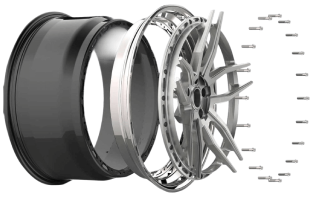
 Modern design
 Perfect fit
 High durability
 Free shipping within 24 hours
 Individual project
 Dedicated specjalist



Car without a driving license – what car can you drive without a license in 2025?
Can you drive a car on the road without a traditional category B driving license? It turns out that's true – there are special license-free cars that can be a solution for younger people, seniors, or those who, for various reasons, don't have a license. In 2025, more and more manufacturers are offering modern microcars that don't require a full license while providing greater comfort and safety than scooters or electric bikes.
In this article, we explain in detail the regulations governing the operation of such vehicles, who can use them, and the requirements that must be met to legally drive them on the road. We also discuss the types of license-free cars available on the market, their purchase, insurance, and registration costs. If you're wondering whether a microcar is the right solution for you or a loved one, you'll find all the important information in one place.
Car without a driving license – what does that really mean?
The concept of a "car without a driving license" may sound controversial, but in practice, it doesn't mean that a driver can get into any car and hit the road without any driving license. This term refers to a special category of vehicles – so-called microcars – which, according to regulations, can be driven after obtaining a lower driving license category, such as AM or B1. Importantly, these vehicles are designed for limited speed and are designed to meet the specific needs of drivers.
Definition and classification of microcars in the light of regulations
Microcars, often also called light quadricycles, are vehicles that are legally not considered full-size passenger cars. They are defined by EU and national regulations, allowing them to be driven by individuals without a traditional category B driving license.
These vehicles include:
- Light quadricycles with an unladen weight of up to 350 kg (or up to 400 kg in the case of structures intended for the transport of persons).
- Maximum speed limit is 45 km/h , which allows for safe travel on local and city roads.
- Equipped with engines with a capacity of up to 50 cm³ (for spark-ignition petrol units) or with a maximum power of up to 4 kW for other types of drive (including electric).
These parameters make this license-free vehicle an ideal solution for younger drivers just starting their road adventure, as well as for older people looking for an alternative to a scooter. In Poland, such micro-cars are becoming increasingly popular, especially in cities.
Differences between a microcar and a regular passenger car
At first glance, a microcar looks like a miniature version of a standard car. However, its modest dimensions conceal significant design and functional differences.
What is the difference between a car without a driving license and a passenger car?
- Size and weight – microcars are much smaller and lighter, making it easier to park in tight spaces and navigate crowded city centers.
- Performance – the speed limit of 45 km/h makes them unsuitable for driving on motorways or expressways.
- Engine and power – the drive units are weaker and designed mainly for short city trips.
- Number of passengers – most models are two-seater or even single-seater cars, which is due to their compact design.
These types of vehicles are also known as microcars, which are intended to be a practical alternative to two-wheelers – with better weather protection and more space for luggage.
What qualifications are needed to drive a car without a driving license in 2025?
Although people colloquially refer to "cars without a driving license," the legal reality is somewhat different. Driving a microcar on Polish roads requires specific authorizations that differ from a standard category B driving license. In 2025, the most common category that allows driving such vehicles is AM . It's also worth dispelling popular myths about so-called "cars with ID" and clearly explaining who, and under what conditions, can legally drive a microcar on Polish roads.
AM category driving license – necessary authorization for microcars
The AM category is a basic license that allows you to drive not only mopeds but also light quadricycles – the popular microcars. Importantly, it can be obtained relatively early.
- Eligibility age : You can get an AM driving license from the age of 14 , which is why vehicles in this category are often called "cars for 14-year-olds".
- Scope of authorization : The AM category covers mopeds with a capacity of up to 50 cm³ and light quadricycles with limited weight and speed (up to 45 km/h).
- How do you get an AM driver's license? The process is similar to other categories: enrolling in a course at a driver training center and passing a theoretical and practical exam. This allows young drivers to acquire a basic understanding of road traffic regulations and learn to drive safely.
Is the "ID" car a real thing? Dispelling the myths
You often hear phrases like "car with ID," suggesting that an ID card is enough to drive a microcar. However, this is a myth.
- Why is the term misleading? An ID card alone does not entitle you to drive any motor vehicle—not even a light quadricycle.
- You need at least basic qualifications (AM category or higher) to be able to legally drive on public roads.
- “Cars with ID” is a rather catchy marketing slogan that is not reflected in applicable law.

Other driving license categories and the possibility of driving a microcar
Possession of a higher category driving license automatically gives you the right to drive AM category vehicles.
- Driving license B: allows you to drive all vehicles that fall within the AM category, including microcars.
- Other categories: holders of categories B1, T, A1, A2 and A can also legally drive light quadricycles.
- Thanks to this, people who already have a scooter or motorcycle license do not need to obtain an additional category to use a microcar.
Who drives microcars most often and who are they intended for?
Microcars, or lightweight four-wheelers, are gaining popularity in Poland. While just a few years ago they were primarily associated with seniors, today they are increasingly being chosen by young drivers and adults who, for various reasons, lack a category B driving license. Their compact size, low fuel consumption, and the ability to operate with lower license categories make them an attractive alternative to scooters or public transport.
Young drivers – freedom of movement from the age of 14
For teenagers, cars for 14-year-olds are synonymous with freedom and independence. The ability to drive a microcar allows young people to:
- Commuting to school and extracurricular activities – especially in smaller towns where public transport is limited.
- Independence from parents – a teenager with the AM category can independently pursue his or her daily duties and passions.
- Greater safety than a scooter – the microcar protects against weather conditions and provides better protection in the event of a collision.
However, it's important to remember the role of parents in the entire process. They help choose a vehicle, participate in the AM driving course, and are responsible for teaching responsible behavior on the road.
Adults without a category B driving license – an alternative in the city
Microcars are also a solution for adults who don't have a standard category B driving license or are unable to obtain one for various reasons. In urban environments, their advantages are particularly evident:
- Easy parking – compact size makes it easy to find a space even in crowded city centers.
- Avoiding traffic jams – lightweight quadricycles can move agilely and often use less congested routes.
- Low operating costs – both in terms of fuel and servicing.
For adults who want to travel quickly and comfortably, a car without a driving license in Poland is an interesting alternative to public transport or a bicycle.
A microcar for the elderly or those with disabilities
Seniors often forgo driving full-size cars due to declining eyesight, reflexes, or health issues. Microcars can be a convenient compromise for them:
- Easier to drive – simple operation and smaller dimensions reduce the stress of driving in city traffic.
- More comfort than on a bicycle or scooter – protection against rain, wind and cold.
- Safety – modern microcars are equipped with seat belts, crumple zones and systems that improve driving stability.
For people with limited mobility or seniors who want to remain independent, a lightweight quadricycle is a practical solution that ensures independence without the need to obtain a category B driving license.
Where can you drive without a driving license and what regulations apply?
Although microcars are commonly referred to as "licenseless cars," their use on the road is subject to strict regulations. Drivers of light quadricycles must adhere to specific rules that differ from those for full-size passenger cars. Where can they be driven, and which roads are off-limits?
Road traffic rules for light quadricycles
Microcars are full-fledged road users, so they must be appropriately equipped and used in accordance with applicable regulations.
- Mandatory vehicle equipment: Every car without a driving license must have working lights, turn signals, mirrors, seat belts, and license plates. A warning triangle and a fire extinguisher are also recommended, although regulations may vary by country.
- Regulations regarding expressways: Microcars are not allowed on:
- on the highways
- expressways
- or in tunnels marked with a no-entry sign for vehicles with a maximum speed below 60 km/h.
- Light quadricycles are intended mainly for use in cities, on local and rural roads, where their limited speed does not pose a threat to traffic.
Speed limits and places where driving is permitted
- Where can you drive a microcar?
These types of vehicles can be driven on most public and private roads, provided there are no signs prohibiting entry for light quadricycles. This means that people with the AM category can freely travel in towns, villages, and suburbs.
- Speed limits: Due to the design of microcars, the maximum speed is 45 km/h, which limits their use to routes with lower traffic volume and permissible speeds.
- Vehicle marking: Drivers of microcars do not have to mark their vehicle with the letter "L" - this obligation only applies to people taking a driving course with an instructor.
- Vehicle registration: While you might sometimes hear about "cars without a registration certificate," in reality, every microcar must be registered with the Department of Motor Vehicles and have valid third-party liability insurance. The term "car without a registration certificate" is a myth that often stems from a misunderstanding of the regulations.
Registering and insuring a car without a driving license – practical aspects
Purchasing a microcar is just the beginning. To legally drive it on Polish roads, the owner must complete all formalities related to vehicle registration and insurance. While the procedures are similar to those for standard passenger cars, there are some differences worth understanding before making a purchase.
Microcar registration process – what do you need to know?
Registration of a microcar is mandatory – regardless of whether the vehicle will be used by a young driver with an AM category or by an adult.
- Required documents: To register a light quadricycle, you must prepare:
- proof of purchase (invoice or sales contract)
- approval confirming the vehicle's compliance with standards
- EC certificate of conformity, which is required for new vehicles imported from EU countries
- Where to register? The entire process takes place at the appropriate motor vehicle department for the vehicle owner's place of residence. That's where license plates and a registration certificate are issued.
Compulsory third party liability insurance for a car without a driving license
Every motor vehicle driving on public roads must have compulsory third-party liability insurance – this also applies to microcars.
- Why is third-party liability insurance necessary? Even at limited speeds (up to 45 km/h), a light quadricycle can cause road damage for which the owner or driver is responsible.
- What is the difference between third party liability insurance for a microcar?
- Third-party liability insurance premiums for young drivers may be higher because insurers consider them a higher-risk group.
- Adults can count on more attractive rates, especially if they already have insurance history for other vehicles.
- Discounts and premiums : It is worth asking about the possibility of applying family discounts or taking advantage of loyalty programs offered by some insurance companies.
Additional insurance – AC, roadside assistance – is it worth it?
Although third party liability insurance is mandatory, it is also worth considering purchasing voluntary policies:
- Auto Casco (AC) : protects the owner of a microcar in the event of theft or damage to the vehicle through no fault of their own. Given the high prices of new light quadricycles (often tens of thousands of zlotys), AC can be a beneficial solution.
- Assistance : provides assistance in the event of a breakdown on the road – from towing to a replacement vehicle.
- Specificity of damage valuation : Insurers may value damage to microcars differently than to full-size cars, which is due to the different construction of the vehicles and the costs of spare parts.
📊 Comparison of estimated third party liability insurance costs
The table shows the approximate costs of third party liability insurance for various types of vehicles and the possibility of extending coverage.
| Vehicle type | Average cost of third party liability insurance per year (PLN) | Third party liability insurance required | Possibility of extension with AC/NNW |
|---|---|---|---|
| Microcar | 800 | Yes | Yes |
| 50cc scooter | 250 | Yes | Rarely |
| Passenger car | 1200 | Yes | Yes |
Is it worth buying a car without a driving license? Cost-benefit analysis
Microcars are becoming increasingly popular in Poland year after year. However, their price and capabilities raise many questions – is purchasing such a vehicle truly worthwhile? In this section, we'll analyze both the purchase and maintenance costs, as well as the benefits of owning a car without a driver's license.
Purchase costs – new and used models
Microcar prices vary depending on the manufacturer, model and age of the vehicle.
- New models :
Buying a new car without a driving license costs between PLN 50,000 and PLN 90,000 , and in the case of luxury versions, even over PLN 100,000. The most popular manufacturers include:- Aixam – leader in the microcar market with a wide range of city and electric models.
- Ligier – modern, elegant designs with a high level of equipment.
- Microcar – affordable vehicles with a simpler design.
- Casalini – premium offerings with an emphasis on design and comfort.
- Used models :
Prices on the secondary market vary more. You can find a car without a driver's license on Allegro for around 15,000–30,000 PLN for older models, but you should be aware that a thorough inspection of the vehicle's technical condition is necessary. Listings like "cars without a driver's license for sale on Allegro" are tempting, but it's worth making sure the car has a valid homologation and is in working order.
Costs of operating and maintaining a microcar
Microcars use much less fuel than traditional cars, but more than scooters.
- Fuel consumption : average 3-4 l/100 km for combustion versions; electric models are even cheaper to run but require access to a charger.
- Inspections and service : a technical inspection costs the same as for a regular car, but spare parts tend to be more expensive due to lower availability.
- Comparison with a scooter : a microcar is more expensive to maintain than a moped, but offers greater comfort and safety.
Advantages and disadvantages of owning a car without a driving license – the user's perspective
The decision to purchase a microcar should be carefully considered. It's worth considering both the advantages and limitations of this type of vehicle.
Pros:
- ✅ Independence – the ability to move independently without having to use public transport.
- ✅ Protection against weather conditions – an advantage over scooters and bicycles.
- ✅ Greater safety than on a two-wheeler.
- ✅ Easy parking in the city thanks to its compact size.
Cons:
- ❌ High purchase price compared to performance.
- ❌ Limited capabilities – maximum speed 45 km/h and no possibility of driving on highways.
- ❌ Less safety in the event of a collision with a full-size car.
- ❌ Limited number of services specializing in microcars.
Popular models and facts – are SMART or FIAT 500 license-free cars?
Questions often arise on automotive forums and social media about whether popular city cars like the SMART Fortwo or FIAT 500 can be driven without a traditional category B driving license. In this section, we'll take a look at the most popular microcars, debunk popular myths, and explain which vehicles actually qualify for driving with an AM license.
Microcars available on the Polish market – model overview
The microcar market in Poland is developing dynamically, and dealers offer vehicles adapted to both young drivers and adults looking for a practical means of transport.
- Aixam is a French brand offering a wide range of modern microcars with diesel and electric engines. Popular models include the Aixam City and Aixam Coupé .
- Ligier – vehicles with a sportier character and rich equipment, often chosen by teenagers and seniors.
- Microcar without a driving license – economical city cars with a simple design, ideal for daily commuting.
- Bajaj Qute – an Indian-made microcar that is gaining popularity thanks to its low price and compact size.
🔍 Microcar example: Aixam City GTO – a two-seater with a 479cc diesel engine. One of the most popular models on the market, appreciated for its modern look, low fuel consumption, and the availability of an electric version.
Source: YouTube – AixamMegaFrance
Each of these models meets the criteria for a light quadricycle and can be ridden by people with an AM license. They are primarily intended for urban riding and short trips, where the 45 km/h speed limit is not a problem.
SMART without a driving license and FIAT 500 – debunking the myths
Despite their small size, the SMART Fortwo and FIAT 500 are not cars that can be driven without a category B driving license.
- Why does a SMART require a driver's license? The SMART Fortwo is a fully-fledged car...
- What about the Fiat 500? The FIAT 500, despite its compact dimensions, is also classified as a passenger car, requiring a category B driving license.
Structural and legal differences:
Light quadricycles (microcars) are designed with weight and speed limits in mind, while the SMART and FIAT 500 are full-size vehicles designed for highways and expressways.
Other vehicles classified as AM – light quads
In addition to microcars, the AM category also includes light quad bikes.
- How do they differ from heavier quads?
Light quads have an unladen weight of up to 350 kg (400 kg for vehicles carrying people) and a maximum speed of 45 km/h.
- How old do you have to be to ride a quad bike?
As with microcars, the AM category can be obtained from the age of 14, which allows you to legally drive light four-wheelers on public roads.
Alternatives to a microcar – what else can you drive with an AM category?
While microcars are an increasingly popular choice among AM license holders, they're not the only option. It's also worth exploring other vehicles that can be driven without a B license. Mopeds, scooters, and innovative lightweight mobility solutions offer interesting alternatives – each with its own advantages and limitations.
Mopeds and scooters – classic vehicles with an AM driving license
The AM category includes not only light quadricycles, but also mopeds and scooters with a capacity of up to 50 cm³ or a power of up to 4 kW.
- Two-seater scooter without a driving license?
Although most scooters are single-person, there are two-person models on the market that can be ridden with the AM category – provided that the passenger also wears a protective helmet and the vehicle is designed to accommodate two people.
Advantages of the scooter:
- ✅ lower purchase and operating costs
- ✅ easy maneuvering in traffic jams
- ✅ greater availability of services and spare parts
Disadvantages of a scooter compared to a microcar:
- ❌ no protection against weather conditions
- ❌ less safety in the event of an accident
- ❌ limited luggage space
Other light vehicles – the future of mobility without a B-license
As technology develops, new innovative solutions for people without a category B driving license appear on the market.
- Light-duty electric vehicles (LEVs) : Light-duty electric vehicles are becoming increasingly popular, as their low weight and limited speed make them suitable for the AM category.
- Light tricycles and mini-cars of the future : automotive manufacturers are working on compact designs aimed at younger users and seniors.
- Approved electric bikes : in some countries, special electric bikes with limited speed are already allowed as a means of transport for people without full driving licenses.
Such solutions could become standard in cities where the focus is on ecological and safe transport over short distances.