



 Modern design
 Perfect fit
 High durability
 Free shipping within 24 hours
 Individual project
 Dedicated caregiver






How to check when your car inspection is due?
Many drivers use the term "vehicle inspection" in different ways, which often leads to confusion. In practice, it's important to distinguish between two things: a vehicle inspection performed at a vehicle inspection station, and a service inspection , which involves maintenance work performed at a workshop—for example, an oil or filter change. In everyday language, these two terms are sometimes confused, but from a regulatory perspective, it's the inspection that determines whether a car is legally roadworthy.
Keeping up with your inspection date isn't just an administrative formality. A current MOT date means your vehicle has passed inspections of key road safety systems—brakes, suspension, lighting, and tire condition. Driving without a valid MOT can result not only in a fine but also in serious problems in the event of a collision or accident.
Many drivers, however, wonder how to check if their car has been inspected and where to find information about its due date . Fortunately, there are several simple methods – both traditional and digital. In the following article, we'll show you step-by-step how to check when your car's inspection is due, where to find this information online, what a visit to a diagnostic station entails, and what happens if a driver misses an MOT appointment.
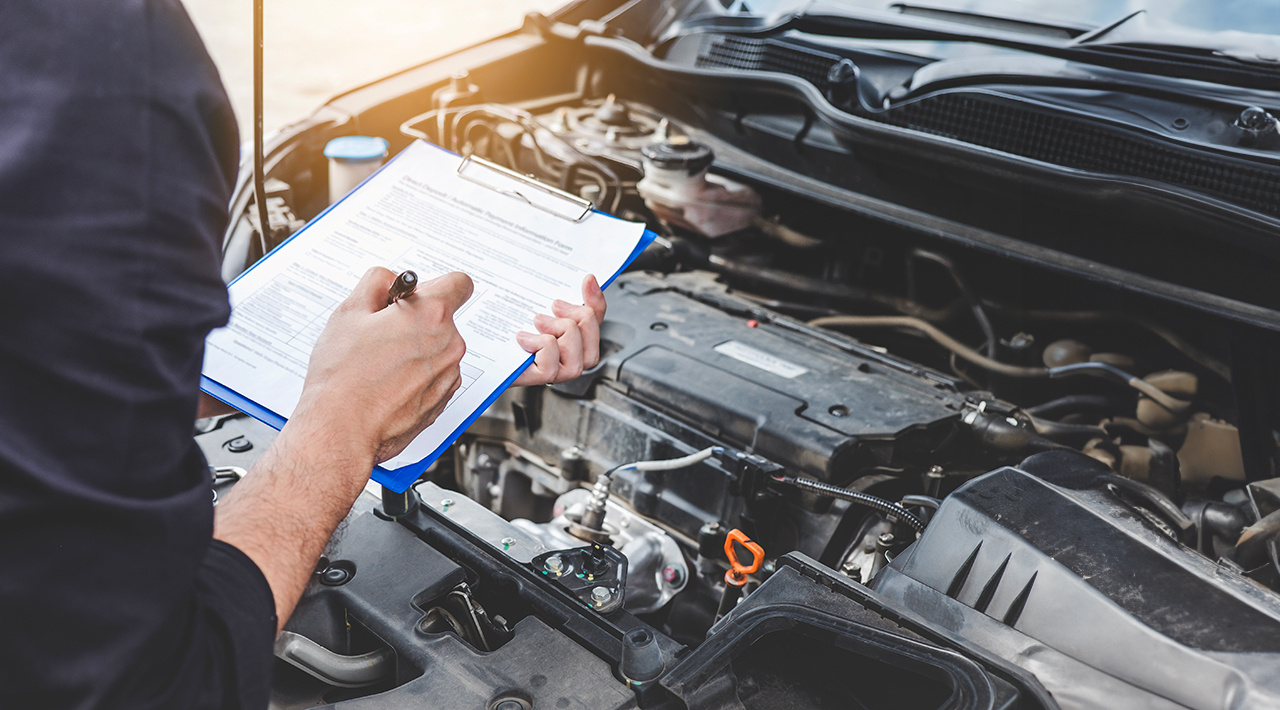
What is a technical inspection and what is it for?
Every vehicle driving on public roads in Poland must undergo a mandatory technical inspection , commonly known as a roadworthiness test. This is a formal vehicle inspection performed at a vehicle inspection station by a licensed technician. Its purpose is to verify that the vehicle meets safety and environmental protection requirements.
In practice, a technical inspection involves a detailed check of the vehicle's most important components—from brakes and suspension to lighting and exhaust emissions. If all systems are functioning properly, the diagnostician confirms a positive test result and schedules the next technical inspection.
Regular technical inspections are crucial not only from a legal perspective, but also, above all, a way to keep your vehicle in good working order and reduce the risk of breakdowns that could endanger the driver, passengers, and other road users.
Technical inspection and periodic inspection – don’t confuse these concepts!
Many drivers use the terms "technical inspection" and "car inspection" interchangeably, but in reality they mean two different things.
Technical inspections are mandatory and mandated by law. Every vehicle must undergo them at specific intervals – usually once a year. Failure to have a current inspection means the vehicle should not be driven on public roads.
A service inspection, often called an oil check, is a procedure performed at a car repair shop. It includes, for example, changing the oil and filters, and inspecting consumables. It is not legally mandatory, although car manufacturers recommend it at specific intervals.
The difference is simple – a technical inspection is a legal requirement, while a service inspection is an element of the proper operation of a car.
Objectives of mandatory vehicle inspection
The main purpose of a technical inspection is to verify whether the vehicle's technical condition allows for safe road use. During the inspection, the diagnostician primarily assesses systems that directly impact safety.
During the examination, the following are checked, among others:
- braking system and its effectiveness
- steering and suspension
- vehicle lighting status
- tires and chassis components
- tightness of the installation and leaks of operating fluids
Another important aspect is environmental protection . As part of the inspection, an exhaust gas analysis is performed to determine whether the vehicle is emitting excessive amounts of harmful substances.
This means that technical inspections serve a dual purpose: protecting both driver safety and the environment. Regular vehicle inspections also allow for early detection of faults that could lead to more serious and expensive breakdowns in the future.
How to Check Your Car's Maintenance Due Date? Three Sure-Term Paths
Many drivers wonder how to check if their car has been inspected and where to find information about the next MOT date. Fortunately, there are several simple and proven methods that allow you to quickly verify your inspection date. This can be done both traditionally, using the vehicle's documents, and online, using government websites or mobile apps.
Traditional method: Registration certificate and stamp
The easiest way to check your vehicle's MOT due date is to check your vehicle's registration certificate. This document contains a special section where the diagnostician enters the date of the next mandatory inspection.
Look for this information in the field marked "Next MOT Date." After passing the inspection, the diagnostician enters the date and confirms it with the vehicle inspection station stamp.
It's worth noting that in many cases, stamps are no longer necessary. For several years, technical inspection information has been sent directly to the central CEPiK database. If the registration certificate runs out of space, the driver doesn't need to immediately replace the document – the data will simply be saved in the system.
Check the date online: HistoriaPojazd.gov.pl website
Another very convenient method is to check your inspection date online. Simply use the official government website HistoriaPojazd.gov.pl , which uses data collected in the CEPiK database.
To check the technical inspection of your car, you need to prepare three pieces of information:
- vehicle registration number
- VIN number
- date of first registration of the car
After entering this data in the system, you can view, among other things, the history of technical inspections, the vehicle's mileage and the current expiry date of the technical inspection.
The big advantage of this method is its speed and the ability to inspect the vehicle without leaving home. It's also a popular way to verify a car before purchasing it on the used car market.
Buying a used car – when should the first inspection be done?
When buying a used car, many drivers wonder whether the vehicle still has a valid MOT and when the next inspection is due. In most cases, the inspection date remains the same as for the previous owner – a change of vehicle ownership does not automatically trigger a new inspection date.
However, there are situations where simply checking the registration certificate date may not be enough. This applies primarily to cars imported from abroad or vehicles with questionable inspection history. In such cases, it's worth checking more thoroughly whether the car has been inspected and when the next inspection is due.
Cars imported from abroad and first registration
In the case of cars imported from abroad, the situation is slightly different than when purchasing a vehicle from the Polish market. Even if the car has a current MOT performed in another country, it is not always automatically recognized in Poland.
In practice, many vehicles must undergo their first technical inspection in Poland before registration. A diagnostician then checks the vehicle's technical condition in accordance with Polish regulations, and the results are recorded in the CEPiK (Central Vehicle Registration and Control) system. Only after this inspection can the vehicle be registered and a new inspection date be obtained.
Therefore, when purchasing an imported car, it is worth making sure whether the vehicle already has a valid inspection in Poland or whether a visit to a vehicle inspection station will be necessary.
Buying a used car – why is it worth verifying the date at the source?
When buying a used car, it's worth checking beyond the registration certificate. While such situations are rare, there are instances of incorrect or outdated entries.
The safest solution is to check the information directly in the official CEPiK database. This allows you to quickly verify how to check a car's inspection and ensure that the vehicle actually has a valid technical inspection.
Simply visit HistoriaPojazd.gov.pl or use the mObywatel app. The system will show the exact date of the last inspection and the next one. This is a simple way to ensure that the car is roadworthy before purchasing and doesn't require an immediate visit to a diagnostic station.
Examination procedure – what to expect at the SKP?
A visit to a Vehicle Inspection Station (VAT) can be stressful for many drivers, especially if they're unfamiliar with the exact process of a technical inspection. In practice, however, the entire procedure is quite quick and orderly. A standard passenger car inspection typically lasts from a dozen to several dozen minutes.
During the visit, the diagnostician checks the most important elements affecting the vehicle's technical condition and operational safety. The driver typically remains in the vehicle or near the diagnostic station while the vehicle undergoes subsequent inspection stages. After completing the inspection, the diagnostician informs the driver of the results and schedules the next technical inspection date.
Elements subject to diagnostician's control
During a technical inspection, the diagnostician checks several key vehicle components. The inspection is performed using specialized measuring equipment and diagnostic stations.
The most frequently verified are:
- vehicle lighting – checking the operation of the low beam, high beam, turn signals and brake lights
- tires – tire condition, tread depth and possible damage
- braking system – braking efficiency and uniformity of brake operation
- suspension and steering system – play in suspension elements, shock absorbers
- seat belts and body parts affecting safety
- exhaust emissions and possible leaks of operating fluids
During the inspection, the vehicle passes over special brake rollers and diagnostic plates, which allow for a precise assessment of the condition of key components.
Test result: positive, significant and hazardous defects
After completing the inspection, the diagnostician issues a technical inspection report. This report can take several forms.
A positive result is, of course, the most desirable. This means the vehicle meets technical requirements and can safely travel on the road. In this case, the diagnostician enters a new inspection date in the CEPiK system.
If significant defects are detected during the inspection, the vehicle will not pass the inspection, but the driver has the option to have them repaired. In such a situation, the owner has 14 days to repair the vehicle and submit it for inspection again. A re-inspection is then performed, which is significantly less expensive than the full cost of the inspection.
The most serious category is hazardous defects . In these cases, the vehicle cannot be used on the road anymore, and its registration certificate may be confiscated. The vehicle must be repaired before it can be re-inspected at a vehicle inspection station.
Consequences of missing a valid inspection
Many drivers neglect their MOT inspection, postponing their visit to the diagnostic station "until later." In practice, however, driving without a valid MOT can lead to serious legal and financial consequences. Furthermore, the lack of a current MOT also means that the vehicle has not been verified for safety, increasing the risk of breakdown or accident.
It's worth remembering that in Poland, technical inspection data is stored in the central CEPiK database. This means that during a roadside inspection, a police officer can immediately check whether a vehicle has a current technical inspection date. If it turns out the inspection has expired, the driver must expect serious consequences.
Penalty fine and confiscation of registration certificate
The most obvious consequence is a fine for failing to pass an inspection. Depending on the circumstances and the officer's decision, the fine can range from approximately 1,500 PLN to as much as 5,000 PLN. The amount of the fine depends on factors such as the vehicle's technical condition and how long it has been driven without a valid inspection.
The police also have the right to seize a vehicle's registration certificate. In practice, this is most often done through a so-called virtual seizure . This means that the document is not physically taken from the driver; information about its seizure is transferred to the CEPiK system. From that moment on, the vehicle formally loses its roadworthiness.
To regain the ability to drive legally, the vehicle owner must undergo a technical inspection at a vehicle inspection station and then have the document reinstated in the system.
No inspection and third party liability insurance – what do you need to know?
Many drivers wonder whether missing a valid MOT could affect their compensation after a collision or accident. This is a crucial question, as the relationship between MOT and insurance isn't always clear to drivers.
Legally, a vehicle without a current MOT should not be driven on public roads. However, in practice, compensation depends on the type of insurance policy and the circumstances of the accident. Therefore, it's worth knowing what the situation is with third-party liability insurance without MOT and voluntary comprehensive insurance.
Does third party liability insurance work without inspection?
In the case of compulsory third-party liability insurance, the situation is relatively clear. Even if a driver causes an accident without a valid MOT, the insurer is usually required to pay compensation to the injured party . This stems from the primary purpose of third-party liability insurance – protecting road accident victims.
This doesn't mean, however, that a lack of inspection goes without consequences. In certain situations, the insurance company may seek reimbursement from the at-fault party for some or all of the compensation paid. This mechanism is called insurance subrogation .
This may occur, for example, when the lack of a technical inspection had a direct impact on the accident – e.g. faulty brakes or a serious suspension fault that should have been detected during the inspection.
Auto Casco (AC) and lack of technical inspection – high risk
A much greater risk arises with voluntary comprehensive insurance (AC) . Most policies contain provisions in the General Terms and Conditions of Insurance (GTC) , which clearly state that the vehicle must be roadworthy and have a valid technical inspection.
If a car is involved in a road accident without a current inspection, the insurer often has grounds to refuse to pay compensation for the vehicle's own damage . This applies, for example, if the driver damages their car in a collision by driving into an obstacle or being involved in an accident through their own fault.
Therefore, it's worth remembering that compensation and the lack of a roadworthiness test can have serious financial consequences. Regular roadworthiness tests are not only a legal obligation but also a way to avoid problems with your insurer in the event of an unexpected situation on the road.
Frequently Asked Questions (FAQ) - Technical Review
Mateusz Mentel
Author of the entryHe has been associated with LadneFelgi.pl since 2024. He specializes in aluminum wheels and modern automotive solutions. His day-to-day responsibilities include creating expert articles, marketing activities, content creation, and managing social media channels.