



 Modern design
 Perfect fit
 High durability
 Free shipping within 24 hours
 Individual project
 Dedicated specjalist




Tire Pressure Warning Light - What to Do When It Comes On? Everything You Need to Know About TPMS.
The tire pressure warning light (TPMS) is one of the most important safety features in a modern car. When the TPMS light suddenly comes on, it's easy to get worried—but it usually signals low tire pressure or a minor imbalance that can be quickly diagnosed. In this guide, we explain why the tire pressure warning light illuminates, how to proceed safely while driving, how to properly refill the tires and reset the system, and when the problem requires a trip to the repair shop. In short: concrete steps, no need to panic.

Tire pressure warning light – why did it come on?
The role of the TPMS (Tire Pressure Monitoring System) in your car
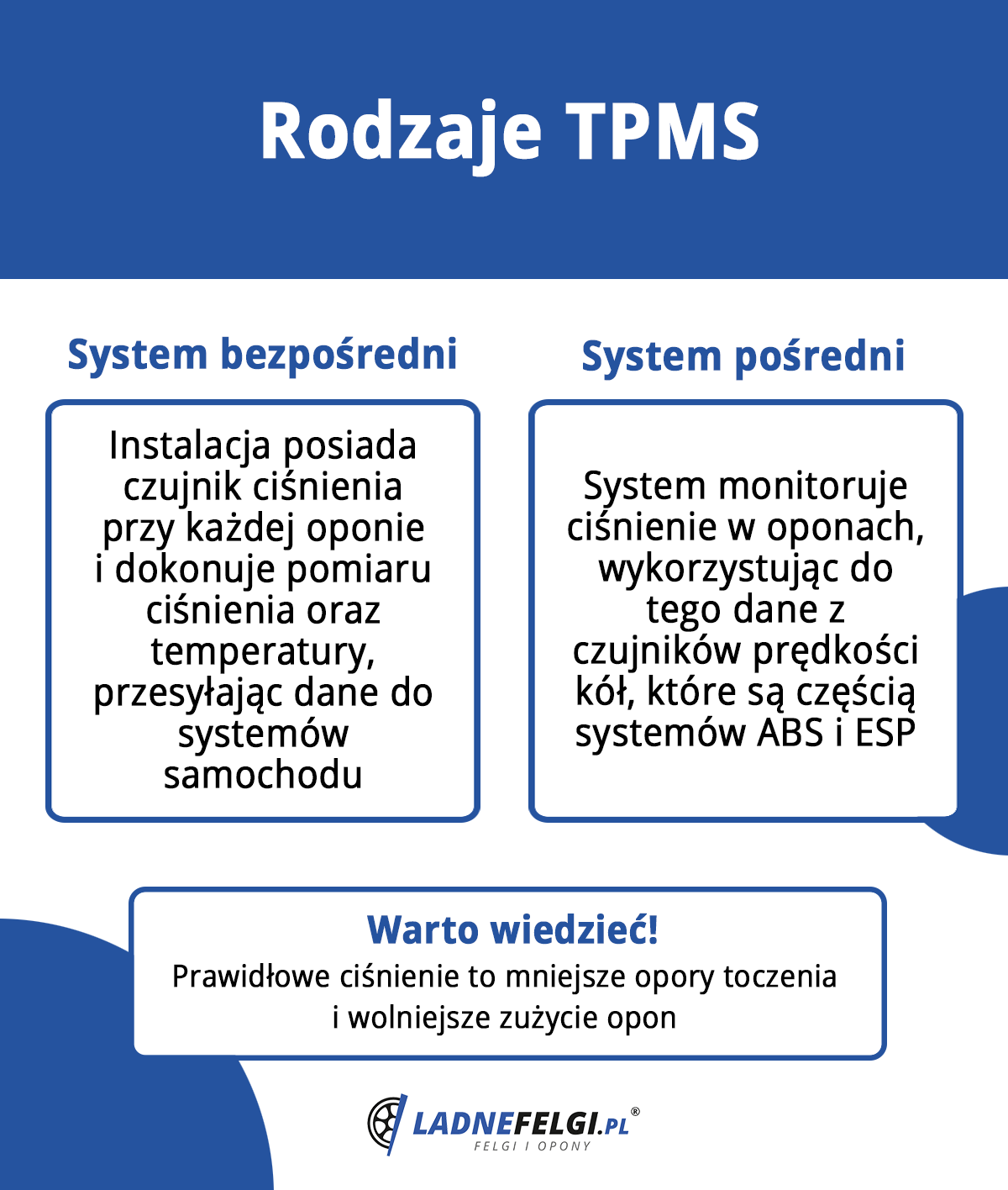
TPMS is an electronic tire pressure monitor – it continuously monitors tire condition and warns the driver when values deviate from the recommended values. In practice, the tire pressure warning light (TPMS warning light) illuminates when a drop in pressure could affect handling, braking distance, or fuel economy. There are two solutions in cars:
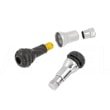
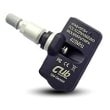
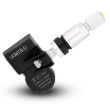
- Direct TPMS – each tire pressure sensor (located in the valve or on the rim) measures pressure and temperature, and the data is sent to the car's computer. High precision, with the ability to pinpoint a specific tire.
- Indirect TPMS – no physical pressure sensors; the system uses ABS/ESP sensors and compares wheel speeds. A change in the rolling diameter (due to pressure loss) triggers an alert. This solution is lighter and cheaper, but less accurate.
Since 2014, TPMS has been standard in most new cars sold in the EU – it is an element that improves safety and fuel efficiency (correct pressure means lower rolling resistance and slower tire wear).
The most common reasons for the light to activate – from everyday to alarming
- Natural pressure loss. Every tire "breathes"—it loses approximately 0.1–0.2 bar per month. This is the most common reason for the tire pressure warning light to come on.
- Ambient temperature fluctuations. A drop in temperature lowers pressure (fall/winter is a classic time for an alert), while a rise in temperature raises it. A change of ~10°C can result in a difference of 0.1–0.2 bar.
- Puncture or tire damage. Sudden or progressive air loss can be caused by a nail, a leaky valve, or damage to the tire bead or sidewall. Low tire pressure can quickly become a hazard.
- TPMS sensor failure (in direct systems). The sensor may be mechanically damaged, leaking, have a dead battery (typically 5–10 years of service), or lose communication. Symptoms include a flashing TPMS light or a system error message.
- Improper calibration or system error. After tire replacement, wheel rotation, rim/pressure change, or occasionally "for no apparent reason," the system requires recalibration or reset. Failure to do so can result in false alerts such as "low tire pressure warning light."
What to do if the tire pressure warning light comes on while driving?

Immediate Response and Safety – What to Do First
When the tire pressure warning light comes on, stay calm and limit your maneuvers—underinflated tires have poorer traction and heat up more quickly. Stop the car in the nearest safe place, turn on your hazard warning lights, and do a quick tire inspection. This sequence helps distinguish a simple drop in pressure from a real problem.
- Slow down smoothly and maintain a stable driving line (no sudden turns or braking).
- Stop safely: parking lot, station, lay-by; turn on the hazard warning lights.
- Walk around the car and check: a “sagging” tire, a foreign body in the tread, damage to the sidewall, a leaky valve.
Precise tire pressure check – how and with what?
Accurate measurement is the basis for any further decision. Use a reliable pressure gauge and check each wheel individually. It's best to measure on "cold" tires to avoid errors resulting from rubber warming up. Reference values can be found on the sticker on the driver's door pillar, on the fuel filler flap, or in the owner's manual.
- Measure the pressure in each tire (and if the spare has a sensor, check that too).
- Take the measurement on cold tires (before driving or after a short commute).
- Compare with the manufacturer's recommendations (front/rear, load) and inflate to the correct values.
- If low tire pressure is due to cold weather, an adjustment will usually solve the "mark" problem on the dashboard.
Actions after measurement – what next if the blood pressure is low or normal?
After correcting the pressure, observe the car and the warning light itself. In many cars with TPMS, the warning light goes out after a few kilometers, but sometimes a reset is necessary. If you notice tire damage, don't continue driving flat—this risks damaging the tire and rim. If the readings are correct and the warning light remains on, a sensor fault or calibration error is likely.
- It was too low → corrected: drive carefully; the light will go out on its own or after a TPMS reset.
- Puncture/damage: Do not continue driving; use an emergency repair kit, fit a spare tire or call for assistance.
- Everything is normal and the light is on: possible sensor/communication failure; tire pressure light does not go off → go to a service center for TPMS diagnostics.
- A quick tip: note the bar/PSI values and check after 1-2 days – a constant, small loss suggests a micro-leak (valve, bead, slow puncture).
Tire pressure warning light – how to make it disappear?
Resetting the TPMS System - Simple Steps to Turn Off the Light
After adding air, the tire pressure warning light doesn't always go out immediately. Many vehicles require a tire pressure sensor reset or a brief calibration of the tire pressure sensor to allow the system to "learn" the new values. The procedure varies by brand, so it's always worth checking your vehicle's manual. Below are the most common scenarios:
- TPMS reset button. Many models have a dedicated button (often with a tire/exclamation point icon) under the steering wheel, in the glove compartment, or on the console. Turn on the ignition and hold it for a few seconds until the light flashes or a calibration message appears.
- Reset from the on-board computer menu. In newer cars, go to Vehicle Settings → Tires/TPMS → Reset/Calibrate and follow the on-screen instructions (sometimes this will confirm that the pressures are set correctly).
- Automatic reset while driving. Some systems automatically turn off after driving several to several dozen kilometers at a constant speed (e.g. >20-30 km/h) after correcting the pressure.
- Practical tip: perform calibration on level ground, with correctly inflated tires and without any unusual load on the trunk.
If you're asking "tire pressure warning light – how do I turn it off?", first set the correct bar/PSI readings, and only then reset. Reversing the order can give false readings.
When is a visit to a professional workshop necessary?
 Scan or click to book
Sometimes, the TPMS warning light doesn't go off despite correct readings and a reset attempt. This is a sign that diagnostics are needed.
- The indicator light remains on after measurement and reset. Possible calibration error or system fault.
- Suspected TPMS sensor damage. In direct systems, the sensor has a battery (usually several years old), and may also be mechanically damaged or lose communication. Replacement/programming requires appropriate equipment.
- Continuous, unexplained loss. If there's no visible nail or damage, and pressure is still leaking, the service center will check the tire bead, valve, rim, and valve seal.
- The light comes on sporadically for no apparent reason. This may indicate a problem with the electronics (e.g., receiving antenna, module).
If the tire pressure warning light doesn't go off, don't treat it as "decoration" - go for a diagnostic before a minor problem turns into a tire or rim failure.
Consequences and legality of driving without working TPMS sensors
In cars factory-equipped with TPMS, the sensors must not be intentionally disabled or removed. In EU countries, this system is mandatory equipment in new cars (since 2014), so driving with a faulty TPMS may result in a failed roadworthiness test and, in the event of an inspection, a fine. Importantly, after an accident, the insurer may investigate whether the faulty tires/TPMS contributed to the incident, complicating the claim settlement.
- Can you drive without tire pressure sensors? No—it's risky and illegal if your vehicle was equipped with them.
- Disabling the tire pressure sensor isn't about saving money, but rather deliberately reducing safety. TPMS actually shortens the response time to a loss of air pressure and helps maintain vehicle stability.
In summary: set the correct pressure, reset the TPMS according to the manufacturer's procedure, and if the light comes on or persists, have it diagnosed at a repair shop. This is the quickest and cheapest way to permanently resolve the problem.