



 Modern design
 Perfect fit
 High durability
 Free shipping within 24 hours
 Individual project
 Dedicated specjalist




Tire tread – everything you need to know about its structure and types
Tire tread is one of the most important elements that determine a car's road handling. Although drivers often focus on tire size or seasonality, it is the tire tread that is responsible for key driving parameters: traction, safety, and effective water drainage. Its shape, depth, and division into different zones directly impact vehicle stability, shortening braking distances, and confident cornering—on both dry and wet surfaces.
In the following article, we'll explain exactly what a tread is, what parts it consists of, and what functions it serves in everyday use. We'll also present the most important types of tire tread and how their design affects a car's performance in various weather conditions. This will help you understand why choosing the right tread isn't just a matter of comfort, but above all, a conscious effort to ensure your own safety and vehicle control.
Tire tread – what exactly is it and why is it crucial?
Tread definition – the first and only contact of the tire with the road
The tire tread is the outer, patterned rubber layer that is the only part that touches the road while driving. This part is responsible for key vehicle handling parameters—from stability to braking performance. Distinctive grooves , blocks , and sipes create a structure that effectively determines how the vehicle handles on dry, wet, or snow-covered roads.
A tire's tread serves several fundamental purposes. Primarily, it provides traction , meaning the tire's ability to "stick" to the ground in various conditions. It is also responsible for the efficient drainage of water and mud from under the tire, preventing loss of contact with the road. Furthermore, proper tire tread affects the level of noise generated while driving and rolling resistance , and consequently, fuel consumption . In practice, this means that a properly designed car tread is the foundation of safe and economical driving.
Tread depth and safety – when does a tire become dangerous?
Tread depth directly impacts how safe tires are, especially on wet surfaces. The shallower the tread depth, the more difficult it is for the tire to evacuate water, significantly increasing the risk of aquaplaning —a situation in which the tire loses contact with the road and begins to "float" on a film of water. This is one of the most dangerous driving situations, as the driver loses control of the vehicle in a fraction of a second.
Polish regulations specify a minimum allowable tread depth of 1.6 mm , but in practice, a tire can become unsafe much earlier. Experts recommend replacing summer tires at around 3 mm and winter tires at 4 mm , as their effectiveness drops dramatically at a lower depth.
To check your tires' tread condition yourself, it's worth checking for built-in wear indicators—TWIs (Tread Wear Indicators). These are small protrusions located in the grooves that indicate when the tread has reached its limit. Regularly checking tread depth is a simple yet crucial step in ensuring road safety.
How is a tire tread constructed? The anatomy of traction.
Blocks, ribs and grooves – basic construction elements
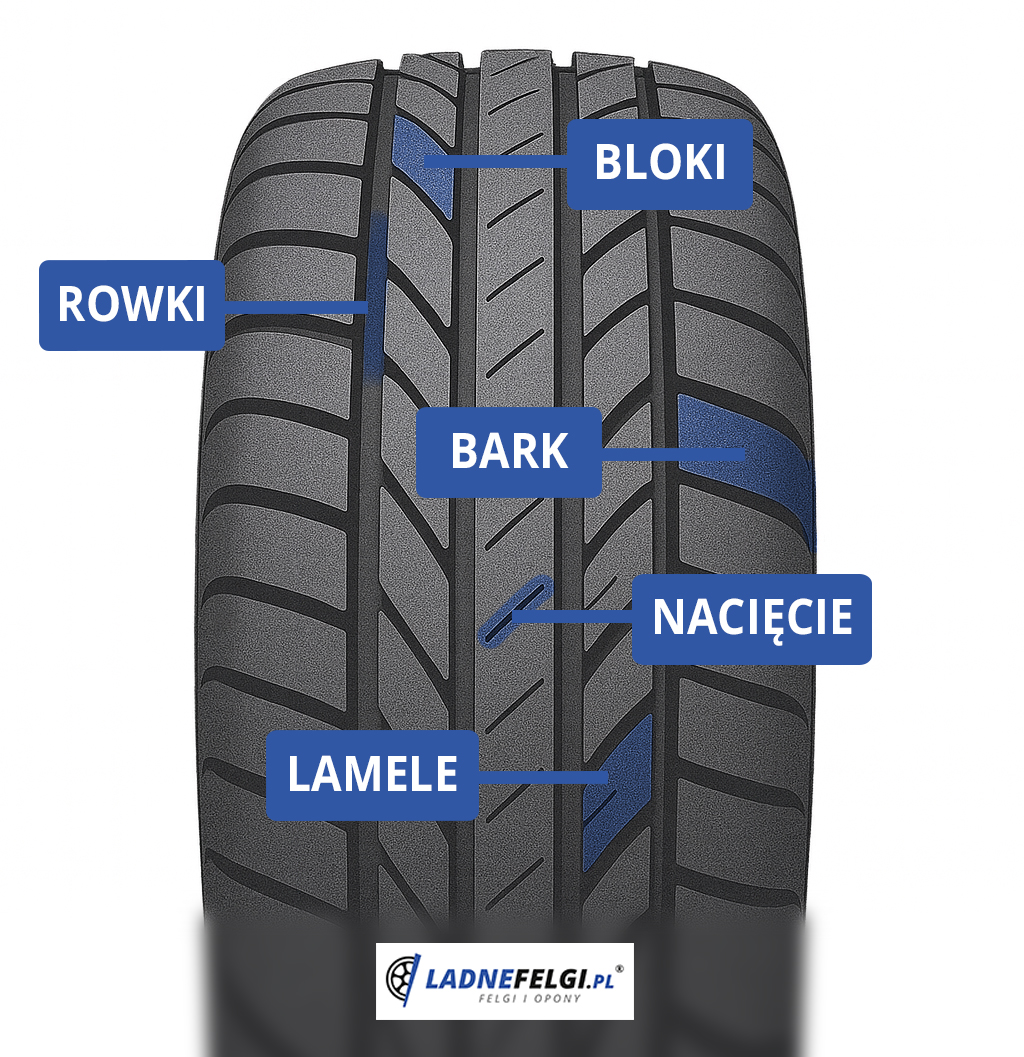
The tread design is a complex system of components that work together to provide maximum traction and driving stability. One of the key components is the tread blocks , also known as tread blocks . — small, regularly spaced pieces of rubber responsible for transferring forces during braking and acceleration . Their shape and arrangement determine how confidently the car starts from a standstill, how quickly it stops in a short braking distance, and how well it holds on to corners.
The second important element is the ribs , continuous strips of rubber running along the circumference of the tire. Thanks to their design , they provide stability when driving straight ahead , improve steering precision , and reduce vibrations transmitted to the steering wheel. The ribs also ensure the tire maintains better contact with the road at higher speeds , which increases vehicle control.
Equally important are the grooves , both circumferential and transverse. They create a tread pattern designed to disperse water , mud , and snow from under the tires. These grooves prevent water from forming under the tire, thus reducing the risk of skidding and aquaplaning. A properly designed tire shape, combining blocks, ribs, and grooves, is the foundation for safety and driving comfort regardless of weather conditions.
Sipes – the secret to grip in difficult conditions
Among the features that distinguish more advanced tire treads, sipes — tiny cuts carved into the tread blocks —are particularly important. Despite their small size, they play a significant role in increasing traction, especially on slippery surfaces. Each sipe acts as an additional edge that "bites" into the road surface, improving stability when starting, braking, and cornering.
Sipes are particularly important in winter tires , which must cope with ice and packed snow. They make the tread more flexible and able to adapt to micro-irregularities in the road , effectively increasing vehicle control in the most challenging conditions. More advanced models even incorporate 3D sipes , which further stiffen the tread blocks , improving stability at higher speeds.
Summer tires have significantly fewer sipes and primarily serve the purpose of water dispersal. Their design differs from winter tires, which prioritize traction on snow and ice. Regardless of tire type, sipes are a key element for safety in challenging road conditions.
Tire tread types – which pattern is best for you?
Symmetrical tread – a classic for a smooth ride
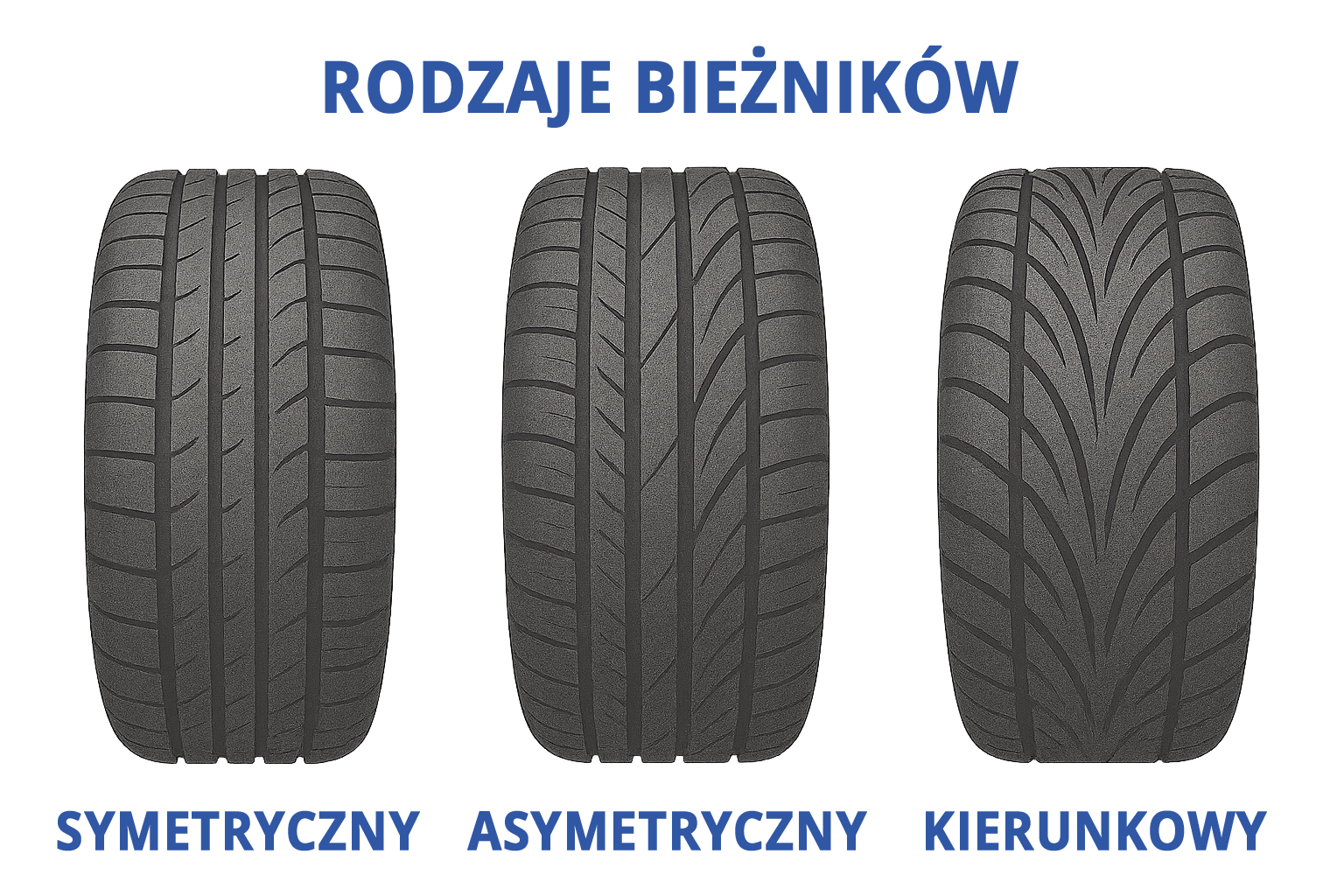
A symmetrical tread is the simplest and most classic type of tire pattern , in which both tread halves are mirror images of each other . This arrangement ensures predictable and stable tire behavior, which translates into high driving comfort. Tires with a symmetrical tread are quiet, have low rolling resistance, and perform well in everyday use.
This solution is especially recommended for drivers who drive leisurely , primarily in the city or on shorter distances . Symmetrical tire treads are often used in city and compact cars, where simplicity, comfort, and economical driving are paramount. Their major advantage is the ability to rotate freely on the vehicle , which allows for even tire wear and extends their lifespan. This is one reason why this type of tire tread is valued by drivers seeking practical and affordable solutions.
Asymmetric tread – a compromise between dry and wet surfaces
The asymmetric tread utilizes two distinct tread patterns on each side of the tire , each performing a different function. The inner side features numerous grooves and sipes for effective water dispersal and stability on wet surfaces. The outer side is more compact and has larger tread blocks , improving cornering traction and enhancing steering precision on dry roads.
Thanks to this design, the asymmetric tread offers an excellent compromise between various weather conditions, making it a popular choice for mid-range and high-end cars, as well as for UHP (Ultra High Performance) tires. However, proper installation is essential for full effectiveness—tires are marked INSIDE / OUTSIDE , indicating which way they should be mounted. A properly mounted asymmetric tire guarantees stability, confidence in curves, and predictable vehicle behavior.
Directional tread (herringbone) – a master of water drainage and snow driving
The directional tread is distinguished by a distinctive V- shaped groove pattern, commonly known as a herringbone . This tire shape is not accidental— it was designed to provide the best possible dispersal of water , slush , and snow from under the tires . This is why the directional tread is considered one of the best in terms of protection against aquaplaning.
Herringbone tires also offer excellent traction in snow, as the V- shaped grooves help the tire " bite " into loose surfaces. This makes them often used in winter tires and all-season tires with higher performance. As with asymmetric models, proper fitment is also crucial. A ROTATION arrow on the tire sidewall indicates the rolling direction—only then will the tread of a directional winter or summer tire perform as intended by the manufacturer.
It's the perfect choice for drivers who drive in more challenging weather conditions or want maximum protection against slipping on wet surfaces.