



 Modern design
 Perfect fit
 High durability
 Free shipping within 24 hours
 Individual project
 Dedicated specjalist



ASR in a car – how does the traction control system work and why is it so important for your safety?
ASR (Anti-Slip Regulation) is one of the pillars of active safety in modern cars. Simply put, traction control ensures that the drive wheels don't lose grip when starting and accelerating. When the electronics detect slippage, the traction control system temporarily reduces engine torque or brakes the selected wheel, restoring stability and efficient power transfer. You'll appreciate the effect, especially on wet, snowy, or sandy surfaces. In this guide, we explain ASR in a car and what it does in practice: how it works "under the hood," in what situations it intervenes, when—if at all—it's worth disabling it, and what to do in the event of a malfunction or a warning light. This will help you consciously use ASR in your daily life and better understand its role in your safety.
ASR system, or simply traction control – your grip guardian
ASR – definition and basic functions
ASR (Anti-Slip Regulation) is an electronic traction control system that prevents drive wheel slippage during acceleration and takeoff. If a wheel begins to spin, the controller reacts immediately: it reduces engine torque (e.g., via the throttle/injection control) or applies brakes to a specific wheel to regain traction. In practice, this means more confident starts in the wet, shorter acceleration distances on slippery surfaces, and more stable corner exits. If you're wondering "ASR – what is it?" or "what is ASR in a car," it's this "guardian" that ensures power is delivered to the asphalt and not into skids. You'll also see trade names like TCS (Traction Control System) or TRC – the operation is similar.
Why is this important?
- maximum traction in the car in worse conditions (rain, snow, sand),
- shorter and more predictable acceleration,
- less tire wear thanks to reduced spinning,
- additional stability when exiting corners.
The evolution and importance of the system in modern cars
ASR originated from the development of ABS : since wheel speed sensors can detect lockup during braking, with the right logic, they can also detect slippage of the driven wheels during acceleration. Over time, brake actuators, an electronic throttle, and engine torque control joined the mix – thus, the modern ASR system, which works in conjunction with ESP/ESC, was born.
It's especially noticeable in front-wheel drive (FF) cars, where it's easy to overload the front tires with both drive and steering. However, it's equally important in cars with powerful engines—regardless of whether the drive is to the front, rear, or all wheels—because high torque causes slippage more quickly.
Today, ASR is standard in modern cars – it operates in the background, requires no maintenance, and works in conjunction with other safety systems. This allows the car to start confidently on slippery surfaces, providing the driver with an additional margin of safety, regardless of experience.
How does ASR work? – Technology at the service of traction
Sensors and control unit – how does ASR “see” slippage?
ASR uses the same wheel speed sensors that control ABS. Each wheel receives its own signal, and the ECU compares their speeds in real time, looking for differences typical of slippage between the drive wheels. When a drive wheel spins faster than the others (or its angular acceleration is abnormally high), the algorithm recognizes this as a loss of traction, and the ASR system immediately steps in. Sensitivity thresholds depend on vehicle speed, selected driving mode, and road surface conditions.
- Data sources: wheel speed sensors (ABS), sometimes steering angle sensor, longitudinal/roll sensors (when ASR works with ESP).
- Logic: Comparison of drive wheels to non-drive wheels or to each other on the same axle.
- Decision: detection of a speed "departure" → the ASR system recognizes it as slippage and issues correction commands.
ASR intervention methods – how does the system regain traction?
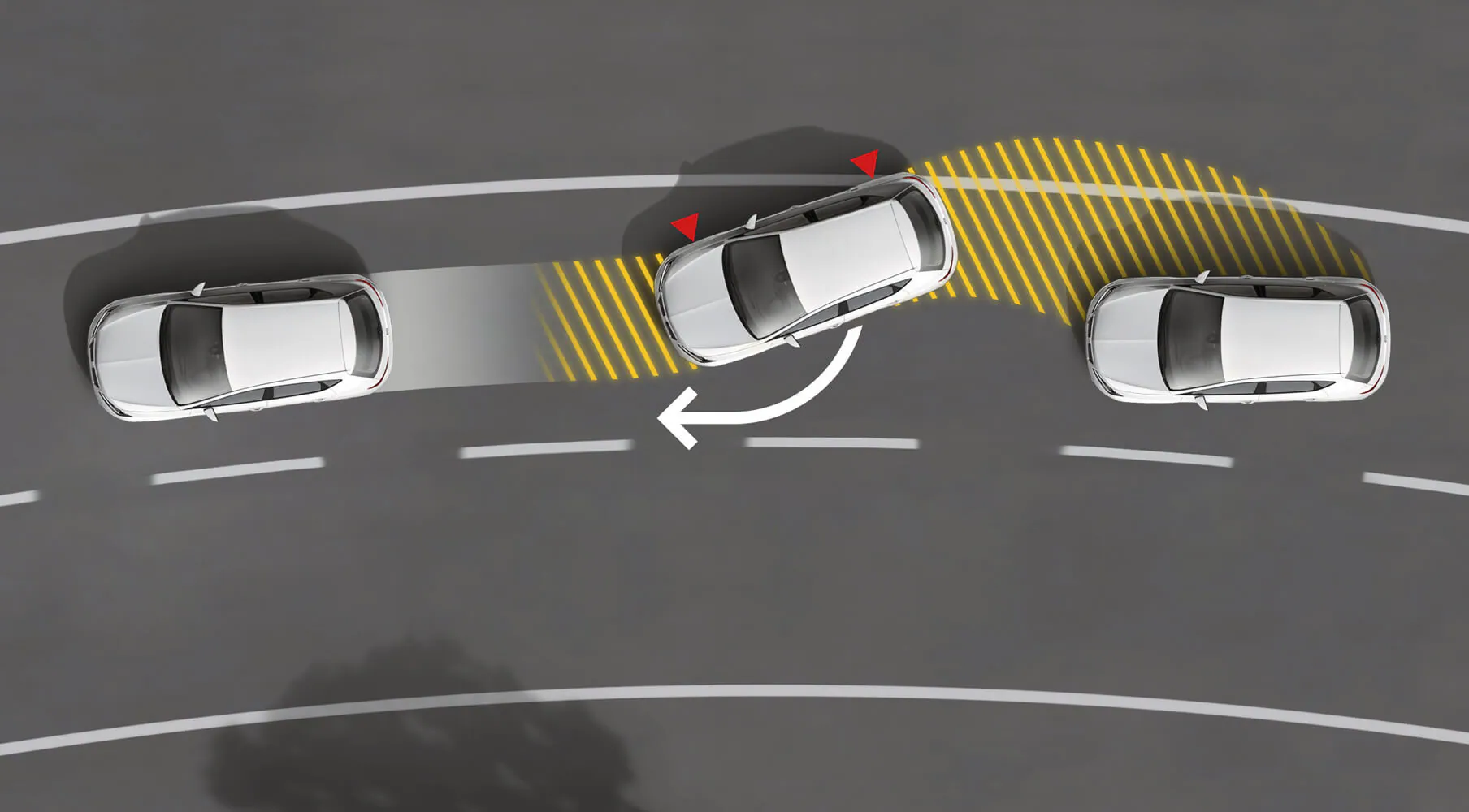
When the algorithm detects slippage, the traction control system has two primary tools: engine torque reduction and selective wheel braking. These actions are coordinated and occur in fractions of a second, ensuring the driver only feels the drive "calming down."
1) Engine power reduction – the ECU can temporarily reduce the pressure on the tires:
- Fuel injection restriction – torque drop without sudden jerks.
- Ignition delay – slight “softening” of power while maintaining smoothness.
- Closing the throttle (in cars with an electronic throttle) – quick, precise torque cut.
2) Selective braking – the system applies the brakes to a specific wheel that is spinning, redirecting torque to the wheel with better traction. The effect is similar to a differential lock , but achieved without mechanical components, using only the brakes.
Why does it work? The tire generates maximum traction at moderate slippage; ASR "pulls" the wheel away from excessive slippage and into the area of best grip, improving acceleration and stability. It all happens so quickly that you'll usually only notice a light flashing or a slight "hold" of the engine.
System operation indication – ASR indicator light
Most cars have a traction control light on their instrument clusters: an icon of a car with "wavy" tire tracks or the word ASR/TCS . A flashing ASR light indicates normal, active intervention – the system is currently limiting torque or braking a wheel to regain traction. This is information, not a reason to panic. A constantly lit light means something else: a fault or system shutdown. In this case, the car will still drive, but without ASR support, it's more likely to cause wheel spin and loss of stability on slippery surfaces, so it's worth having the cause diagnosed by a service center as soon as possible.
In what situations does the ASR system activate? – Your safety in difficult conditions
Starting and accelerating on slippery surfaces
When the drive wheels encounter wet roads, ice, packed snow, loose gravel, or sand, it's easy to skid with even the slightest acceleration. ASR (traction control) monitors wheel speeds and immediately reduces engine torque or gently brakes a wheel that begins to spin. This allows the car to move off more smoothly, without nervous clutch kicking or slippage, while the driver maintains directional control.
- Typical scenarios: starting from a light after rain, starting uphill in snow, leaving the shoulder on gravel, accelerating while overtaking on wet asphalt.
- What you will feel: a short "hold" of power and a flashing ASR warning light – this is a normal symptom of the system working, which "returns" traction to the tire.
Driving on uneven surfaces and cornering
On bumpy roads, manholes, or patched asphalt, one of the drive wheels can momentarily lose contact with the ground. The ASR system instantly corrects the slippage by braking that wheel or reducing torque to maintain predictable traction. Similarly, in curves: when the inside wheel experiences reduced traction during a dynamic exit, the ASR moderates the slippage to prevent the car from drifting further than intended.
- What you gain: more stable lane keeping, less risk of veering off the line, better throttle control when load changes.
- In practice: you feel a more "glued" exit from a corner and no sudden jerks in the drive, even when the surface is patched or wet.
Can the ASR traction control system be turned off? – When does "off" make sense?

“ASR OFF” button – when and why do manufacturers provide this option?
In most cars, you can temporarily disable or limit the ASR function using the "ASR OFF" button (sometimes "TCS/TC OFF"). Manufacturers designed this feature for situations where controlled slippage of the drive wheels helps you get out of a standstill or start off in particularly difficult terrain. Examples include:
- Deep snow , mud , very loose gravel / sand – slightly “digging” the tire can be more effective than the system constantly “holding” power.
- Driving with snow chains – limiting ASR intervention makes it easier to start smoothly and maintain pace.
- Specific sporting scenarios (e.g. on a track, in controlled conditions) – conscious slip management can improve traction when exiting a corner, but this is the domain of experienced drivers.
In normal traffic , can traction control be turned off ? – Technically, yes, but practically, it makes no sense. What does disabling traction control do ? Mainly, it allows the wheels to spin – useful only in the exceptions described.
Risks and consequences of driving with ASR turned off
In everyday use, traction control really helps maintain traction. Disabling it under normal conditions means:
- a significantly higher risk of wheel slippage , longer and less predictable acceleration,
- easier loss of stability on wet, slippery or uneven asphalt,
- greater tire wear due to spinning.
Additionally, many cars don't completely disable ASR (they only limit sensitivity) or automatically reactivate the system after exceeding a certain speed or after restarting the engine – these are deliberate safety measures. Therefore, if you must use "ASR OFF," do so briefly , consciously, and only in specific circumstances , and then restore the system. In everyday driving, ASR remains your ally.
What to do if the ASR system fails? – Recognition and action

ASR warning light on constantly - fault signal
If the ASR light isn't flashing but is on constantly, it indicates a malfunction or that the system's electronics have disabled it. In many cars, this is accompanied by a message like "ASR OFF" or other warning lights—ABS/ESP—appear simultaneously, as the systems share sensors and modules. This set of warning lights means that the ASR system is no longer supporting the driver, and the car is more susceptible to wheel slippage under acceleration. Don't treat this as a minor issue to be "driven away."
Symptoms and potential causes of ASR failure
A malfunction of the ASR system most often manifests itself as increased wheel spin when starting and reduced stability in wet or snowy conditions. The vehicle may veer off course more quickly when accelerating in a curve, and the driver may experience a subjective feeling of "less confident" driving.
Most common causes:
- Damaged wheel speed sensor (ABS) – the most common fault; corrosion, dirt or open circuit.
- Wiring/connectors at the hubs and along the chassis – abrasion, moisture, mechanical damage.
- ABS/ASR/ESP control module – less common, but possible cold solder joints or electronics error.
- Brake hydraulics (tightened caliper, uneven operation) – may interfere with selective wheel braking.
Procedure in case of breakdown – visit to a specialist
Don't ignore an illuminated ASR warning light . This reduces safety, especially on slippery surfaces. It's best to visit a professional workshop for computer diagnostics as soon as possible. A technician will read the error codes, check the sensor signals and the condition of the wiring harnesses, and then confirm the cause. A quick repair will restore full functionality of the traction control and associated systems (ABS/ESP), allowing the car to react predictably in difficult conditions again.