


 Modern design
 Perfect fit
 High durability
 Free shipping within 24 hours
 Individual project
 Dedicated specjalist



Air conditioning decontamination – How much does it cost? Which methods should you choose? Why is it key to a healthy journey?
A car's air conditioning isn't just comfortable on hot days, but also a component that, without proper care, can become a breeding ground for bacteria, fungi, and unpleasant odors. Regular air conditioning decontamination (i.e., cleaning and disinfecting the air conditioning system) and periodic air conditioning service are crucial for passenger health, cabin air quality, and the efficiency of the entire system. In this guide, we explain what air conditioning decontamination involves, the various cleaning methods for car air conditioning (chemical, ozonation, ultrasound), how much it costs, how often to perform it, and why neglect leads to decreased performance, malfunctions, and discomfort. You'll receive practical tips and reliable comparisons to help you choose the best air conditioning cleaning method for your car.

What does air conditioning fumigation involve? – Fighting the invisible enemy
The air conditioning system creates ideal conditions for microbial growth. The evaporator is the most vulnerable – a cool heat exchanger on whose fins moisture condenses. After the engine is turned off, warm, stagnant, humid air remains in the housing. This mixture, combined with dust, pollen, and organic film carried by the airflow, promotes colonization by fungi , molds , and bacteria . The result is a characteristic, "musty" odor after turning on the air vents and a greater risk of respiratory irritation in sensitive passengers. Air conditioning mold removal involves targeted cleaning and disinfection of the air conditioning system to restore hygiene to the evaporator and ventilation ducts.
The purpose of fungicide removal – health and comfort
The main goal is to eliminate microorganisms and their metabolites from the evaporator and ducts, thus removing the source of unpleasant odors and improving cabin air quality. Effective air conditioning decontamination reduces the risk of irritation, sneezing, and watery eyes, and also improves the system's efficiency – a clean evaporator releases heat more efficiently, resulting in faster cooling and more stable operation. Regularly cleaning your car's air conditioning is a simple way to make your journey more enjoyable and ensure the system operates efficiently and without unnecessary breakdowns.
What are the different air conditioning cleaning methods? – A choice for every need.
Ozonation – effectiveness without chemicals
Ozonation involves the operation of an O₃ generator inside the vehicle with recirculation enabled. Reactive ozone oxidizes odor-causing molecules and deactivates fungi, bacteria, and viruses both in the cabin and in the air ducts. This treatment removes mold from the air conditioning system without leaving any traces of chemical agents. However, after the cycle, the car must be thoroughly aired out.
Advantages : good disinfection of air conditioning , neutralization of odors (e.g. tobacco smoke), reaching hard-to-reach places, often accepted by allergy sufferers.
Disadvantages : requires several dozen minutes of airing; does not remove physical deposits and biofilm from the evaporator; in case of severe fungal infestation it can only be a supporting stage.
Ultrasonic method (chemical with the use of a machine) – precision and efficiency
A special device breaks down the antifungal fluid into a micro-mist, which the ventilation system distributes through the evaporator and ducts. The fine-droplet phase persists longer on the fins, improving contact with contaminants and microorganisms.
Advantages : high efficiency and even coverage of elements; in one treatment we have both air conditioning cleaning and disinfection; short service time.
Disadvantages : Chemical preparations are used (designed for air conditioning, with a tested safety profile); the proper selection of the agent and procedure is required. A well-executed method is one of the most effective in the category of car air conditioning decontamination.
Dry cleaning (spray, foam) – for DIY enthusiasts
This is a home-use variant: an applicator injects foam or spray through channels (e.g., grates, condensate drains) so that the product reaches the evaporator. The agent dissolves biofilm and limits microbial growth, while excess flows through the drains.
Advantages : low cost, quick availability, ability to act immediately.
Cons : Limited effectiveness – without experience, it's difficult to reach the evaporator and all the nooks and crannies; risk of leaving product residue; effects may be shorter than those of professional treatments. Good as a maintenance solution between services, but not as a remedy for severe mold infestation .
Cleaning the evaporator mechanically – a radical solution
The most invasive and yet most thorough method involves removing dashboard components, gaining access to the HVAC housing, and directly cleaning the evaporator (using a brush, low-pressure washer, and service products), followed by drying and reassembling the system.
Advantages : most complete removal of deposits, dust and biofilm ; lasting improvement in odor and performance.
Disadvantages : high price and time-consuming; risk of damage to finishing elements; makes sense mainly in extreme cases or after long periods of neglect.
In everyday use, it is better to regularly disinfect the air conditioning using the ultrasonic method or combined protocols (e.g. chemicals + ozone), and leave the mechanical method as a "last resort".
How much does an air conditioning inspection and cleaning cost?
| Service | Price |
|---|---|
| Fungus removal – ozonation Quick odor freshening (approx. 20–40 min) | 80–150 PLN |
| Mold removal – ultrasonic/chemical mist. Refreshes the cabin and air ducts. | 120–200 PLN |
| Chemical cleaning of the evaporator The most effective method at the source of the problem | 180–350 PLN |
| Cabin air filter replacement (standard) Labor; + filter cost depending on model | 40–90 PLN* |
| Cabin filter replacement (carbon/HEPA) Better odor and dust neutralization; + filter cost | 80–160 PLN* |
| Air conditioning system inspection Pressure test, leaks, basic diagnostics | 100–180 PLN |
| Package: evaporator + new filter. The best effect/price ratio. | 220–450 PLN |
* Approximate prices; depending on car model, filter and region.
The cost of fungicide treatment – ozonation vs. ultrasound
As a guide, air conditioning decontamination using ozonation typically costs around 50–150 PLN , depending on the generator's operating hours and the workshop's policy. The ultrasonic method (disinfectant mist directed through the evaporator and ducts) can be more expensive: typically around 100–250 PLN , often including a cabin filter replacement. Prices vary by city, but these ranges accurately reflect the realities of the Polish market. (For example, see kb.pl, workshop pricing; local price lists confirm the ranges.)
Full air conditioning service – price and scope of service
A "full" air conditioning service typically includes a leak test (nitrogen/UV), refrigerant refill (R134a or the newer R1234yf), cabin filter replacement , and air conditioning cleaning (de-fungal treatment) . A typical bill ranges from around 200–500 PLN , but the type of refrigerant is key: older R134a is significantly cheaper, while R1234yf can increase the cost of refilling to ~ 250–700 PLN (more expensive refrigerant and a different service station). Labor alone plus the first 100g often runs around 150–300 PLN, with the next 100g billed separately. Cabin filter replacement typically costs several dozen PLN for labor plus the cost of the filter itself (paper/carbon), which often adds up to 60–120 PLN.
Factors influencing the price of the service
The final price of an air conditioning decontamination and inspection is influenced by several variables: vehicle type (system capacity and service access; large SUV are usually more expensive), location (large cities = higher hourly rates), scope of additional work (e.g., leak repair, dryer replacement, sensor replacement), and season —spring/summer are peak demand periods and often result in higher prices. It's worth comparing local price lists and making sure the quoted price includes leak testing, refrigerant volume, and the type of decontamination.
Tip: If you have an R1234yf system, ask about rates per 100g - the differences between services can be significant.
Why is it worth taking care of your car's air conditioning? – Comfort and health above all else
Passenger health – clean air without allergens
Regular air conditioning cleaning and disinfection , as well as replacing the cabin filter, inhibit the growth of bacteria, fungi, mold, and dust mites around the evaporator and in the air ducts. A contaminated system not only causes unpleasant odors; it also potentially irritates the respiratory tract, worsens allergy symptoms, causes headaches, and causes general fatigue while driving. Maintaining a clean system is an investment in your health and the health of your loved ones, especially if children or allergy sufferers travel in the car.
Travel comfort and system efficiency
A well-functioning air conditioning system ensures stable thermal comfort in the summer and helps quickly dry the air, reducing window fogging on rainy or humid days. When the evaporator and ducts are covered with biofilm, airflow decreases, cooling takes longer, and the compressor works harder. The result? Reduced efficiency and higher fuel consumption. Regular air conditioning dehumidification and scheduled air conditioning service restore the system's integrity and efficiency, allowing the cabin to cool faster and remain odor-free.
Longer life of the air conditioning system
Prevention also pays off financially. Periodic leak checks and refrigerant replenishment reduce the risk of dry running and overheating, which accelerate compressor wear—one of the most expensive system components. A clean evaporator and unobstructed condensate drains reduce the load on the entire system, resulting in quieter operation, fewer breakdowns, and longer component life. In short, regular air conditioning inspections cost many times less than repairing the consequences of neglect.
How often should you have your air conditioning serviced? – A schedule for every driver
Manufacturer and expert recommendations – optimal frequency
The safest practice is to decontaminate the air conditioning system and replace the cabin filter at least once a year , preferably in spring – just before the system is used intensively. This schedule maintains the hygiene of the evaporator and ducts, while also maintaining stable cooling performance. It's worth checking the refrigerant level every 12–24 months (or according to the vehicle manufacturer's recommendations), as a low refrigerant stresses the compressor and reduces efficiency. If the vehicle operates in difficult conditions – many short trips, frequent traffic jams, transporting allergy sufferers and children, driving in dusty and polleny conditions – consider decontaminating the air conditioning system every six months . This schedule better protects the health of passengers and extends the life of components.
Signs indicating the need for immediate fungicide treatment
If you notice a musty/" wet rag " odor after turning on the system, it's a sign that biofilm is developing on the evaporator and in the ducts – the air conditioning should be treated immediately. Also alarming are a noticeable decrease in cooling efficiency (it takes longer to reach the set temperature, windows are less likely to demist) and allergic symptoms in passengers – sneezing, coughing, watery eyes, and eye irritation. In such cases, don't wait for your "spring checkup"; have your air conditioning cleaned immediately and replace the cabin filter with a new one (preferably carbon or one with an antibacterial coating).
Which air conditioning service should you choose? – Professionalism and trust
Features of a good air conditioning service
A reliable air conditioning service center has specialized equipment : a modern service station (for R134a and R1234yf), a leak tester , an ozonator , and an ultrasonic device for mold removal . Experience and certifications are also important – mechanics should be certified to work with refrigerants and trained in HVAC decontamination and diagnostic procedures. Pay attention to price transparency : a clear price list broken down by labor, refrigerant amount (e.g., rate per 100g), filter cost, and mold removal method. Positive customer reviews and the ability to view the service report (how much refrigerant was recovered/refilled, leak test results) are a good indicator. Such an air conditioning inspection provides predictable results and significantly improves system hygiene.
What to avoid when choosing a service?
Be wary of suspiciously low prices – they often indicate a cheap, ineffective product, a lack of ozonator/ultrasound, or hidden costs added after the fact. Avoid places that only offer a " refrigerant top-up " without a leak test, filter replacement, or mold removal – this is a temporary measure, not a service. If the workshop can't explain the difference between ozonation and ultrasonic treatment, doesn't offer a protocol with refrigerant amounts, or doesn't have a cabin filter readily available, look for another air conditioning service.
What are the possible consequences of neglecting your air conditioning system? – The price of ignorance
Health hazards
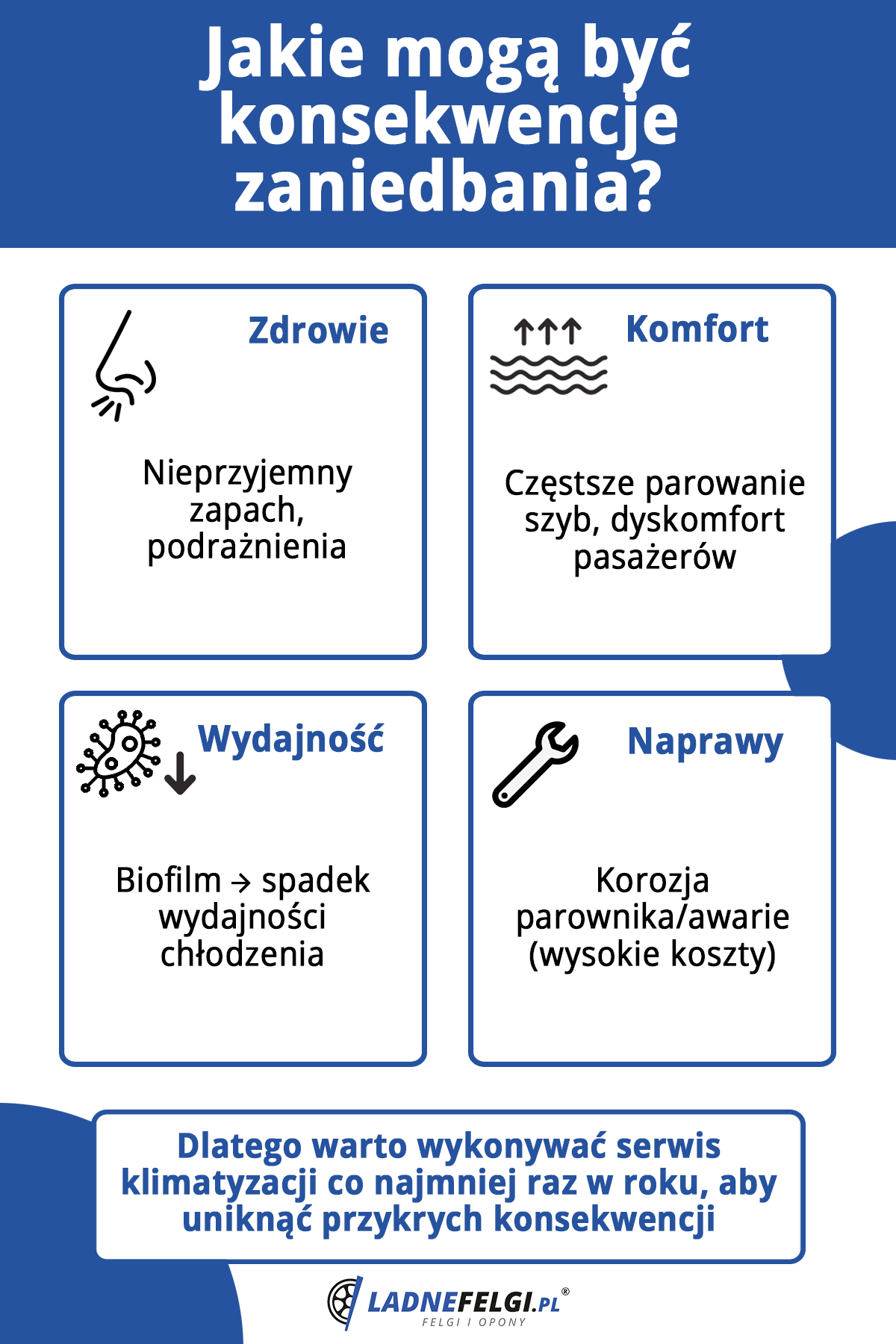
Failure to regularly clean air conditioning systems promotes the growth of bacteria, fungi, and molds around the evaporator. Sensitive passengers experience exacerbations of allergies and asthma, increased upper respiratory tract infections, coughs, hoarseness, headaches, and fatigue. In extreme, neglected cases, ventilation systems can create conditions conducive to the proliferation of Legionella bacteria— legionellosis is rare but serious, especially for immunocompromised individuals, children, and seniors. Maintaining a clean system is a real preventative measure, not just a matter of cabin odor.
Repair costs and loss of efficiency
A neglected system loses efficiency: air cools more slowly, windows fog up longer, and the compressor works harder. Refrigerant deficiency, leaks, or a dirty evaporator increase the load on components and the risk of failure of expensive components— the compressor , dryer , condenser , or the evaporator itself . This results in higher service bills and a noticeable increase in fuel consumption, as a faulty system starts more often and runs longer. In severe mold infestation , a thorough air conditioning cleaning may be necessary, or even replacing the evaporator after removing part of the dashboard—a costly and time-consuming operation that can be avoided with regular air conditioning service.