



 Modern design
 Perfect fit
 High durability
 Free shipping within 24 hours
 Individual project
 Dedicated caregiver





Blown head gasket – what are the symptoms and how much does it cost to repair?
The cylinder head gasket, often abbreviated as UPG , is a key component of an internal combustion engine. Although relatively thin, it performs an extremely important function: it is responsible for ensuring a tight seal between the engine block and the cylinder head. Its function is to separate the three different systems operating within the engine: the combustion chambers, the oil passages, and the cooling system passages. This allows each of these systems to function properly without fluid mixing or pressure loss.
When a head gasket fails, problems arise that can lead to serious engine failure . It's no wonder, then, that many drivers fear this problem—it's often associated with a costly repair. In practice, however, prompt recognition of the first signs of damage and proper vehicle diagnostics are crucial.
In this article, we'll explain the most common symptoms of a blown head gasket, why it happens, and how much it costs to replace a head gasket at a repair shop. This will help you assess the situation and make the right decision before a minor issue develops into a more serious engine problem.
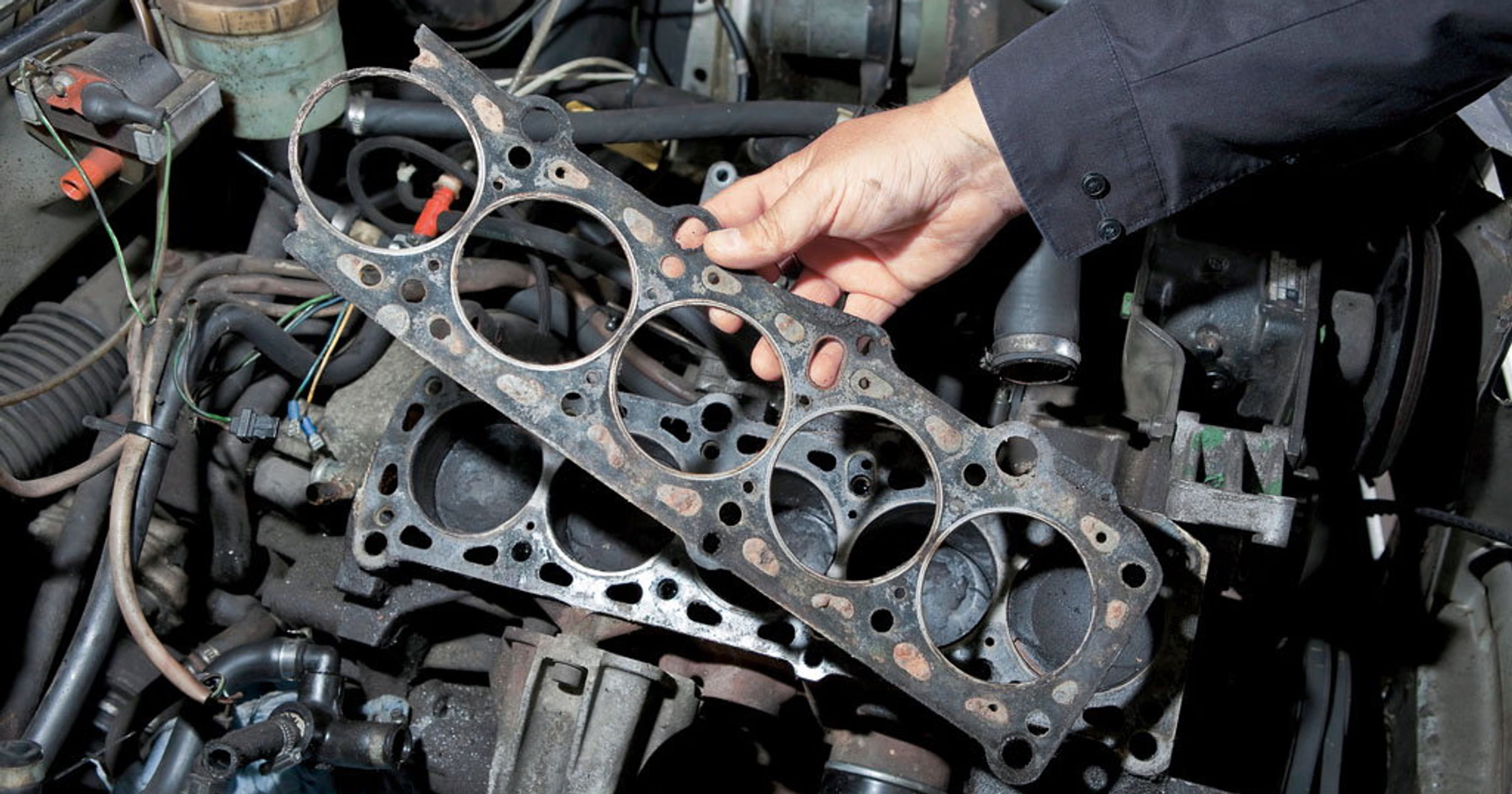
How to recognize a blown head gasket? Typical symptoms
A damaged head gasket rarely produces a single, clear symptom. In practice, drivers often notice several symptoms simultaneously, which gradually develop during daily use. Therefore, it's crucial to closely monitor the engine and operating fluids.
This type of failure causes a loss of seal between the engine block and the cylinder head. As a result, coolant, engine oil, or exhaust gases can leak into areas where they shouldn't be. These problems cause the characteristic symptoms of a head gasket failure, which can often be noticed before a more serious engine failure occurs.
The most common symptoms of gasket damage – what should you be concerned about?
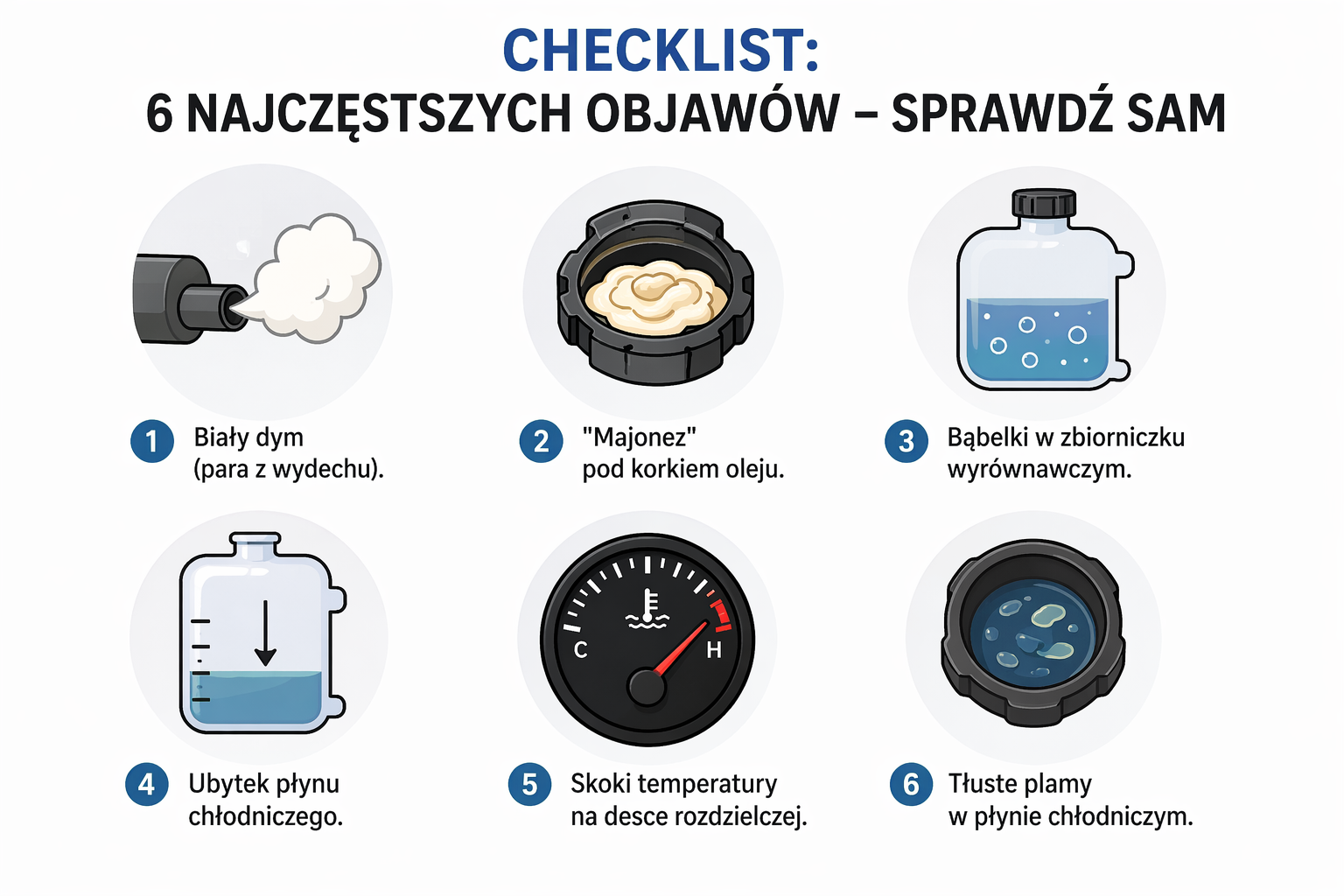
One of the most characteristic symptoms is white smoke from the exhaust pipe . This is actually water vapor produced when coolant enters the combustion chamber. However, it's worth remembering that light steam is normal when the engine is cold – a problem arises when the smoke persists even after the engine has warmed up.
Another warning sign could be a loss of coolant without any visible leaks. If the coolant level in the reservoir drops regularly and there are no spots under the car, it's worth checking for a damaged seal.
Another very characteristic symptom is the appearance of so-called "mayonnaise" under the oil filler cap . This is a clear, creamy substance resulting from the mixing of engine oil and coolant. This deposit may be one of the first signs that a damaged head gasket is causing fluid leakage between systems.
It's also worth checking for air bubbles in the expansion tank . If you hear a gurgling sound or see bubbles appearing after removing the coolant cap, this may indicate exhaust gases are entering the cooling system.
Such symptoms do not always mean immediate engine failure, but they are a clear signal that a quick car diagnostic is needed.
Do petrol and diesel engines suffer from the same problems?
Although the head gasket can fail in both petrol and diesel engines, the symptoms and causes of failure may differ slightly.
In the case of petrol engines, engine overheating is a common cause. High temperatures can cause the head to warp or the gasket to lose its seal, leading to fluid leaks between systems. Therefore, in many cases, head gasket symptoms appear after previous cooling system problems.
Diesel engines, on the other hand, operate under significantly higher pressure in the combustion chamber. Because of this, the seal itself is usually stronger, but when it fails, the symptoms can be more severe – for example, a rapid increase in pressure in the cooling system or heavy smoke.
Regardless of the type of engine, the principle is the same - the sooner the diagnosis and repair are performed, the greater the chance that the head gasket replacement will be completed without the need for a costly overhaul of the entire engine.
How to Check a Head Gasket? Home and Professional Methods
Suspecting a damaged head gasket doesn't always mean the immediate need to disassemble the engine. In many cases, relatively quick diagnostics are possible, allowing you to confirm or rule out this fault. It's worth starting with simple observations, and then—if the symptoms are concerning—conducting more thorough tests at a workshop.
This allows you to avoid making a hasty decision about a costly repair and to ascertain whether the problem is actually related to the head gasket or is related to another fault in the cooling or lubrication system.
CO2 Leak Tester – The Most Effective Way to Quickly Diagnose
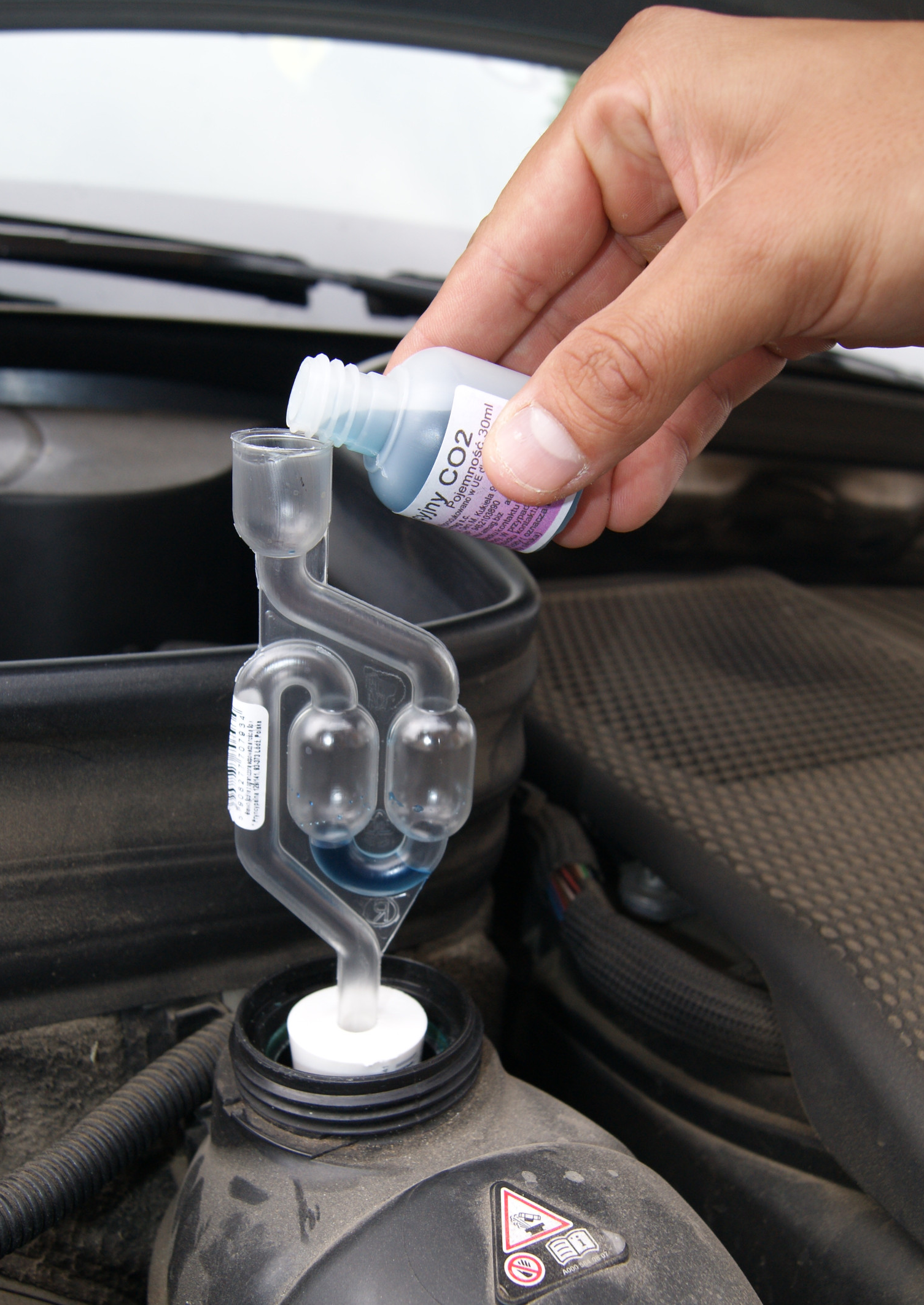
One of the most reliable ways to check for head gasket damage is to use a special CO2 tester . This simple diagnostic tool detects the presence of exhaust gases in the cooling system.
The principle of operation is relatively simple. The tester is mounted on the filler neck of the expansion tank and then draws air from the cooling system through a special chemical fluid. If carbon dioxide from exhaust gases appears in the fluid, the substance changes color – most often from blue to green or yellow.
This result means that exhaust gases are leaking from the combustion chamber into the cooling system, which in most cases indicates a damaged head gasket or a micro-crack in the head . This is why a CO2 tester is considered one of the most reliable diagnostic methods before deciding to disassemble the engine.
Visual verification and compression measurement
The first clues about the condition of the gasket can also be obtained through a simple visual inspection of the engine. It's worth checking the condition of the engine oil and coolant first.
If the oil is milky in color or a distinctive light-colored deposit appears on the filler cap, this may indicate coolant mixing with the oil. Also, look for a greasy film or gas bubbles in the expansion tank.
The next diagnostic step is measuring the cylinder compression pressure . This is performed in a workshop using a special pressure gauge. Low or uneven readings between cylinders may indicate a leak in the combustion system, which is often associated with a damaged head gasket.
This combination of visual observations and mechanical measurements allows for a relatively precise determination of whether we are actually dealing with a UPG problem or whether the cause lies in another engine component.
Blown Head Gasket - What Causes Failure?
A head gasket failure rarely occurs without a cause. In the vast majority of cases, it's a consequence of other technical issues or long-term vehicle operation. Understanding the causes of the failure not only allows you to accurately assess the situation but also reduces the risk of the problem recurring after repair.
The most common culprit is the cooling system or improper engine operation. It's important to remember that the gasket operates in extreme conditions – it must withstand high temperatures and the enormous pressure created in the combustion chamber. If any engine component stops functioning properly, the gasket is one of the first components to fail.
Engine overheating – the gasket's number one enemy
The most common cause of gasket failure is engine overheating . High temperatures cause metal to expand, which can lead to cylinder head deformation or a loss of seal between the cylinder head and the engine block.
Overheating is often caused by problems with the cooling system. This can be caused by a faulty thermostat that doesn't open at the right time, a clogged radiator that restricts airflow, or a malfunctioning water pump responsible for circulating the coolant.
Driving style is also important. Aggressive acceleration or heavy engine load immediately after starting, when the engine is still cold, can accelerate wear of many components. In such conditions, materials expand unevenly, which promotes micro-leaks in the head and gasket area.
Material defects and vehicle age
The second important factor is simply the natural wear and tear of the material . In many cars, the head gasket operates for hundreds of thousands of kilometers under very harsh conditions. After 200,000–300,000 km, the material can gradually lose its properties, increasing the risk of leaks.
The problem can also occur after previous engine repairs. If proper assembly procedures were not followed during the cylinder head overhaul—for example, the correct bolt torque was not applied or the surface flatness was not checked—the gasket may fail much sooner than expected.
Therefore, when replacing a head gasket, it's crucial to follow the entire procedure according to the manufacturer's instructions. This includes re-sizing the head, using new bolts, and thoroughly checking the cooling system to prevent a recurrence of the same engine failure in the future.
Repairing a blown head gasket – process and stages
Repairing a damaged head gasket is one of the more complex engine maintenance tasks. Contrary to popular belief, it doesn't simply involve removing the old gasket and installing a new one. To restore full engine tightness, several additional inspections and service steps are necessary.
This is why replacing a head gasket can be expensive – a large portion of the cost stems from the mechanic's time-consuming work and the need to check numerous engine components. Skipping these steps could result in a recurrence of the problem shortly thereafter.
Why is it not enough to “just replace the gasket”?
One of the most important steps in repair is cylinder head planing , or smoothing out the cylinder head's contact surface. When the engine overheats, the cylinder head can become slightly distorted. Even a slight unevenness will prevent the new gasket from adhering perfectly to the engine block surface.
Face milling involves the highly precise grinding of a thin layer of metal at a specialized machining facility. This creates a perfectly even surface for the cylinder head, allowing for proper sealing of the engine after reassembly.
Additionally, mechanics often check the cylinder head's water jacket, or the cooling system channels inside it, for leaks. This test allows for the detection of any micro-cracks caused by overheating. If such damage were missed, simply replacing the cylinder head gasket would not solve the problem.
What else should be replaced during the repair?
During this repair, it's standard practice to install new cylinder head bolts. These components are responsible for properly pressing the cylinder head against the engine block and operate under very high tension. In most modern engines, these bolts are disposable, which undergo controlled stretching after tightening.
During service, the engine oil, filter, and coolant are typically also replaced. This is necessary because a failed seal can cause these fluids to mix, impairing their lubricating and cooling properties.
In many cases, mechanics also recommend performing additional work if the engine is already partially disassembled. This may include replacing valve seals or timing belt components. While this increases the cost of the parts, it saves on future labor and significantly improves the overall condition of the engine.
Thanks to our comprehensive approach, replacing the head gasket is not just a repair of a single component, but a full service of key engine parts that restores its proper tightness and efficiency.
How much does it cost to repair a blown head gasket?
For many drivers, the news of a damaged head gasket immediately conjures up high costs. In reality, the cost of repair can vary greatly and depends on several factors – engine design, the scope of additional work, and the rates applicable at a given workshop.
It's worth emphasizing one thing: the gasket itself is a relatively inexpensive component. The largest portion of the bill is the time-consuming work of the mechanic and the additional steps required to ensure a durable and safe repair for the engine.
Parts cost vs. labor cost – where do these figures come from?
As for the part itself, a head gasket is relatively inexpensive in most cars. Depending on the car model, its price usually ranges from around 100 to 400 PLN. But the list of expenses doesn't end there.
The cost also includes head planning, a service performed at a specialized machining facility. The cost of such an operation typically ranges from approximately 150 to 400 PLN, depending on the head design and the scope of work.
The biggest expense, however, remains labor. To replace a head gasket, a mechanic must disassemble numerous engine components—including the manifolds, timing belt, valve cover, and the cylinder head itself. All these parts must then be reassembled according to the manufacturer's procedures. The entire process can take anywhere from a few to even a dozen hours.
For this reason, the cost of replacing the head gasket is largely due to the amount of work involved and additional consumables such as oil, filter and coolant.
Estimated price ranges for popular models
For simple four-cylinder engines, found in many popular city and compact cars, the price of a head gasket replacement typically ranges from around 1,500 to 3,500 PLN . This amount includes parts, cylinder head planning, and labor.
However, if we're dealing with a more complex engine design, the costs can be significantly higher. In V6 or V8 engines, which have two cylinder heads, the scope of work is much greater. In such cases, cylinder head repair costs can range from 4,000 to 8,000 PLN , and in some premium cars, even more.
The final cost also depends on the workshop's location and reputation. Authorized service centers or specialized engine repair shops often have higher labor rates, but they also offer greater experience and a guarantee of the service performed.
Therefore, if you suspect such a failure, it's worth consulting with several garages and requesting an accurate quote. In many cases, a quick diagnosis and early head gasket replacement can help avoid much more serious and expensive engine problems.
Blown head gasket - instead of panic, good diagnostics
A head gasket failure has a bad reputation for good reason – it can be costly and can immobilize a car. However, this doesn't mean that every speck of white exhaust smoke or coolant loss is a sure sign of a worst-case scenario. In practice, a lot depends on thorough diagnostics. It's the careful examination of symptoms, rather than hasty decisions, that allows you to avoid unnecessary costs and properly assess the engine's condition.
For drivers, the most important piece of information is simple: if you suspect a problem, don't panic, but don't delay either. The sooner your car gets checked, the greater the chance that the repair will be completed at a reasonable cost.
Is it always necessary to overhaul the engine?
Not every symptom resembling a head gasket failure necessarily indicates the need for a complete engine overhaul. That's why it's crucial to distinguish this fault from other problems that may cause similar symptoms.
For example, light-colored deposits under the oil cap don't always indicate oil and coolant mixing. In winter or on very short trips, it may be the result of simple condensation in the engine. Similarly, white smoke from the exhaust after starting the car on a cold morning is often just water vapor, not a sign of a serious problem.
Symptoms resembling a PPG can also be caused by a damaged oil cooler , a cooling system leak, or another engine component failure. In such cases, repair can be much simpler and less expensive than replacing the head gasket.
Therefore, before spending several thousand zlotys, it is worth investing in a reliable car diagnostics – preferably in a workshop that has experience with engines and can confirm the fault based on a CO2 test, compression measurement and inspection of operating fluids.
How to take care of your car to avoid UPG failure?
While not every failure can be prevented, in the case of a head gasket, much depends on the daily use of the car. Maintaining the cooling system is crucial, as engine overheating is the most common cause of leaks.
The most important rules are simple:
- check the coolant level regularly,
- don't ignore the increase in engine temperature,
- keep your thermostat, radiator and water pump in good working order,
- avoid hard driving on a cold engine,
- React quickly to the first signs of overheating or fluid loss.
These basic habits really do matter. In many cases, they determine whether an engine will travel hundreds of thousands of kilometers without serious failure, or whether it will require expensive repairs sooner.
A blown head gasket is a serious problem, but it doesn't always spell disaster. Instead of panicking, it's best to prioritize proper diagnosis, quick action, and a calm assessment of the situation. This will help avoid unnecessary expenses and further exacerbation of the problem.
Frequently Asked Questions (FAQ)
Mateusz Mentel
Author of the entryHe has been associated with LadneFelgi.pl since 2024. He specializes in aluminum wheels and modern automotive solutions. His day-to-day responsibilities include creating expert articles, marketing activities, content creation, and managing social media channels.