



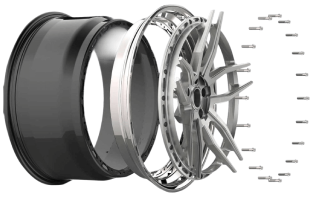
 Modern design
 Perfect fit
 High durability
 Free shipping within 24 hours
 Individual project
 Dedicated specjalist






How to Wash Your Rims After Winter: A Risk-Free Guide
Winter is the most difficult time of year for rims. Road salt, sand, slush, brake dust, and moisture create an aggressive chemical environment that accelerates corrosion and destroys the rim's protective coating. Whether you have aluminum, steel, or forged rims, spring cleaning is not just about aesthetics, but above all, durability.
This guide shows you how to properly wash your rims after winter – without the risk of damaging the paint, without micro-scratches and without accelerated corrosion.
Why is washing rims after winter so important?
During the winter, the following accumulates on the rims:
- sodium and calcium chlorides (road salt),
- metal dust from brake discs and pads,
- particles of asphalt and sand,
- moisture remaining in micro-cracks.
Road salt has a hygroscopic effect, attracting moisture from the air. This means that even in dry weather, a layer of micro-moisture can remain on the rim surface. Combined with metallic brake dust, this creates an environment conducive to electrochemical corrosion.
In the case of aluminum rims, a clear coat protects the aluminum from oxidation. However, if damaged, a whitish coating and micro-bubbles appear. Steel rims are even more susceptible – paint damage quickly leads to rust. Forged rims, although mechanically very durable, also require surface protection.
What is the difference between washing aluminum, steel and forged rims?
Aluminum rims – paint and its protection
Aluminum rims are most often made of aluminum alloys and coated with clear coat or powder coating. Aluminum itself forms a natural oxide layer that protects against further oxidation, but in practice, rims are additionally protected by a paint coating.
The most important features when washing:
- the surface is relatively hard, but susceptible to micro-scratches,
- clear varnish may become dull under the influence of aggressive chemicals,
- strong acidic preparations may cause discoloration.
Recommendation: Use products with a neutral pH (6–8) and avoid highly acidic products unless absolutely necessary. Brushes should be soft, preferably synthetic. Be especially careful with polished and transparently painted rims—the thin paint layer can be damaged by excessive scrubbing.
Steel rims – greater mechanical resistance, greater risk of corrosion
Steel rims are heavier and less susceptible to mechanical damage, but significantly more susceptible to corrosion. Steel without paint protection reacts very quickly with moisture and salt.
The most important differences when washing:
- powder coating is sometimes thicker than in aluminum rims,
- small paint chips can lead to rust spots,
- Failure to clean the inside of the rim accelerates degradation.
For steel rims, it's acceptable to use slightly stronger products, but it's crucial to dry the surface quickly. Leaving water around the rims and vents promotes corrosion.
If the first rust spots appear after winter, it is worth protecting them before corrosion begins to spread under the paintwork.
Forged rims – precision workmanship and demanding surface
Forged rims are created by forming an aluminum alloy under high pressure. This gives them a compact material structure and very high mechanical strength. They are lighter than conventional cast rims while maintaining the same strength.
However, in the context of cleaning, it is not the mechanical properties that are key, but the surface finish.
Forged rims often have:
- brushed surface,
- polished edges,
- high-gloss transparent varnish,
- ceramic coatings.
These types of finishes are more sensitive to:
- strong acidic agents,
- hard brushes,
- aggressive high-pressure washing at close range.
For forged rims it is recommended to:
- using only chemicals dedicated to premium rims,
- avoiding brushes with hard bristles,
- very thorough drying.
It is worth emphasizing: forged rims are very durable structurally, but their aesthetic finish can be damaged in the same way as in the case of cast rims.

Can acidic agents be used?
Acidic agents effectively remove strong deposits, but:
- may dull the paint,
- accelerate the degradation of the protective coating,
- are not recommended for regular use.
Neutral detergents and deironizers are safer for cleaning after winter. Acidic detergents should only be used in situations of heavy soiling and in accordance with the manufacturer's recommendations.
How to properly wash rims after winter – step by step
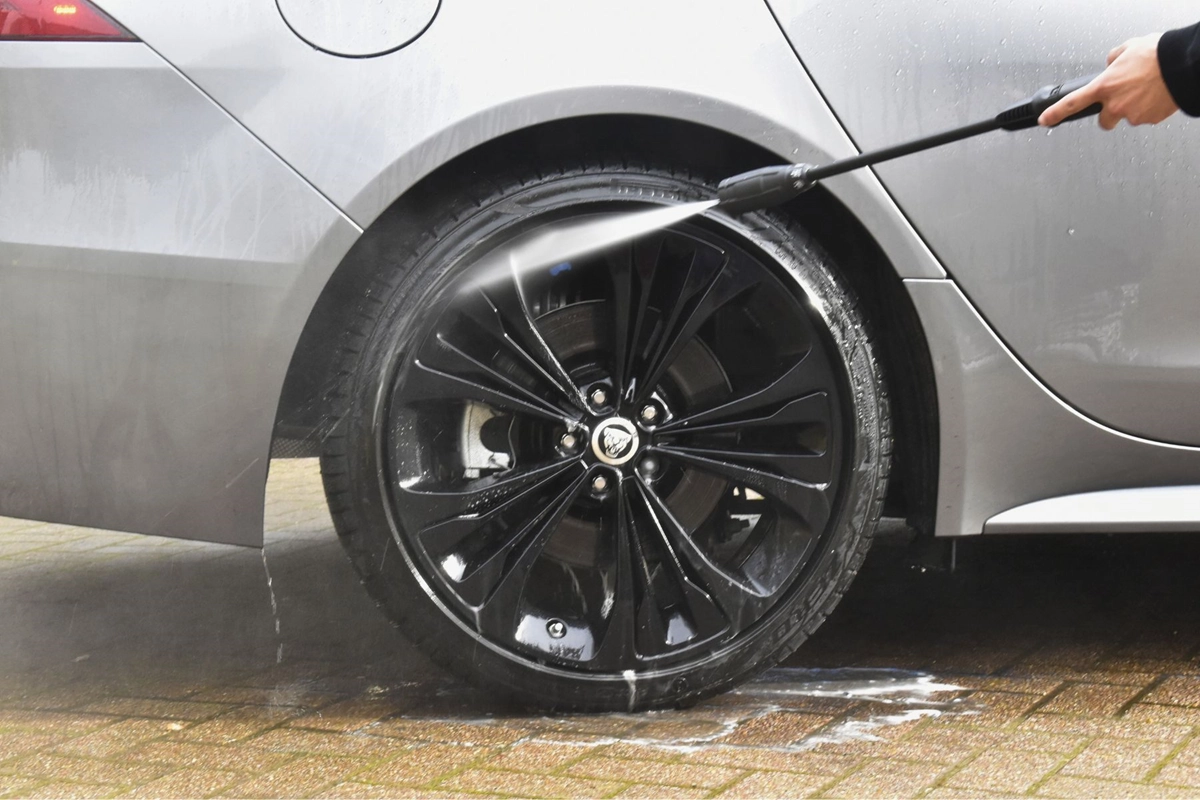
1. Pre-wash – rinsing off dirt
We always start by thoroughly rinsing the wheel with pressurized water. The goal is to remove any sand and loose dirt that could scratch the paint during further washing.
Note: Do not direct the water jet from very close to the caps and valves.
2. Removal of metallic deposits (so-called deironization)
Brake pad dust contains iron particles that embed themselves into the paint. The safest method is to use a deironizer (pH neutral), which chemically reacts with the metal particles. This reaction manifests itself as a characteristic red/purple discoloration. After a few minutes, rinse the product thoroughly.
Why is this important? Leftover metallic residue accelerates micro-corrosion and can cause permanent discoloration.
3. Basic washing
We use a dedicated, pH-neutral wheel cleaner.
- a soft brush for the inside of the arms,
- detailing brush for screws,
- microfiber for the front of the rim.
We never use hard wire brushes or abrasive kitchen sponges.
4. Dry thoroughly
Leaving water on can cause mineral stains. It's best to use:
- microfiber towel,
- compressed air (if available),
- blowers.
5. Surface protection
After thorough cleaning, it is worth using:
- rim wax,
- synthetic sealant,
- ceramic coating (the most durable solution).
The protection reduces dirt adhesion and facilitates subsequent washing.
How NOT to wash rims – the most common mistakes
- Washing on hot rims – chemicals evaporate faster and may leave stains.
- Using strong acidic preparations unnecessarily.
- Using the same sponge for car paint and rims.
- Scrubbing without rinsing the sand first.
- Allowing the chemical to dry on the rim.
- Washing only the front – dirt from the inside accelerates corrosion.
Is an automatic car wash a good idea?
Brush car washes often don't thoroughly clean the inside of the rim, and the hard brushes can cause micro-scratches. Touchless car washes are safer, but the chemicals used can be highly alkaline.
For a thorough cleaning after winter, hand washing is best.
How often should you wash your rims in the spring and summer season?
After a thorough spring wash, regular cleaning every 2-4 weeks will suffice, depending on your driving style and brake pad type.
Frequently Asked Questions (FAQ) – Washing rims after winter
Mateusz Mentel
Author of the entryHe has been associated with LadneFelgi.pl since 2024. He specializes in aluminum wheels and modern automotive solutions. His day-to-day responsibilities include creating expert articles, marketing activities, content creation, and managing social media channels.