



 Modern design
 Perfect fit
 High durability
 Free shipping within 24 hours
 Individual project
 Dedicated specjalist



What do car warning lights mean?
Every driver, whether they've just received their license or have driven hundreds of thousands of kilometers, regularly encounters them during their daily vehicle operation. In-car warning lights—because that's what we're talking about—are the foundation of human-machine communication. The moment you turn the key in the ignition or press the start button, dozens of sensors come to life, instantly verifying the status of individual systems.
For many people, the sight of illuminated symbols on the screen behind the wheel can be stressful. This is usually due to a simple lack of knowledge and uncertainty about what the warning lights in the car mean. However, the dashboard isn't there to scare the driver. Its main purpose is to provide the highest level of protection – both for passengers and the vehicle itself. Correctly reading the messages the car sends us is key to anticipating faults and avoiding extremely costly repairs in the future. Ignoring warning signals, in turn, is the quickest way to a situation where a sudden breakdown leaves us stranded far from home.
Knowing the meaning of your car's warning lights not only provides invaluable safety but also complete peace of mind behind the wheel. In this article, we'll guide you through the maze of the most popular pictograms. We'll explain the crucial color coding, detail what specific icons communicate, and, most importantly, advise you on how to react depending on the driving situation.
Car warning lights – types
Before we begin analyzing individual symbols, it's worth understanding the basic operating principle of the entire system. Car manufacturers designed it to be as intuitive as possible, basing it on a mechanism we're familiar with at every intersection: traffic lights.
Colors matter – three-level division of controls
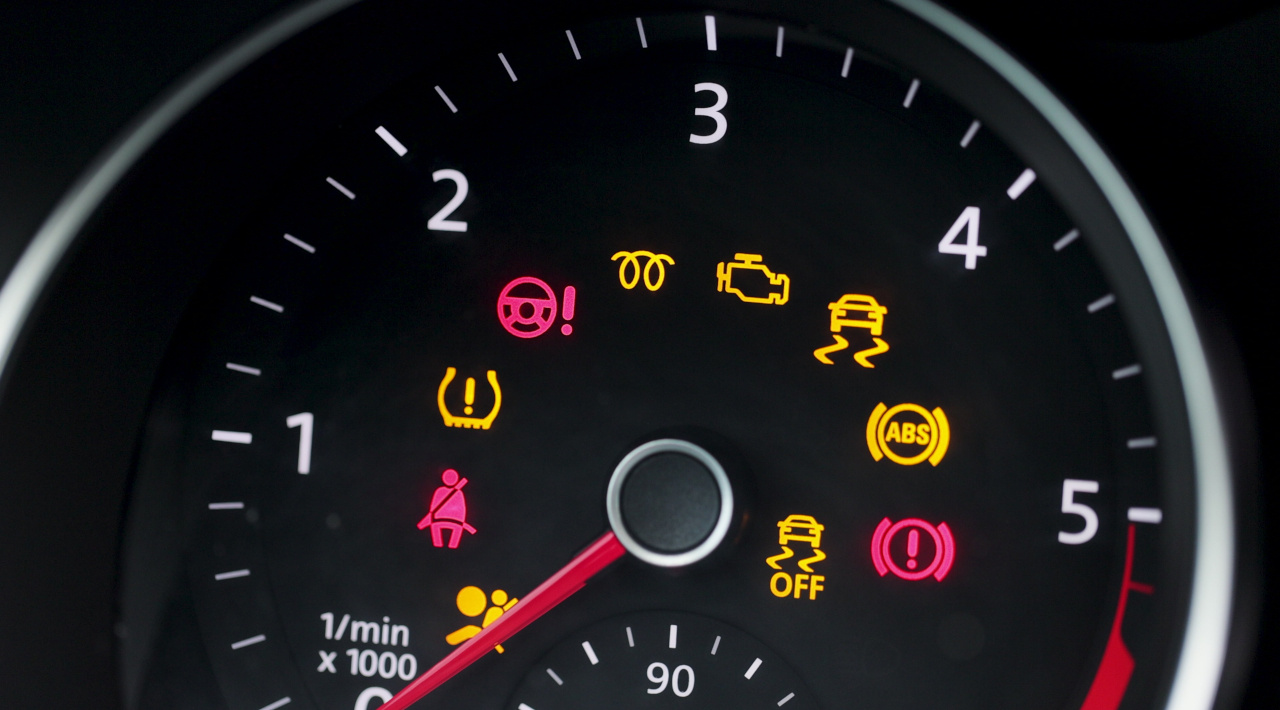
The types of warning lights in a car are most easily divided into three main, universal color groups. This simple hierarchy allows the driver to assess the severity of a problem in a split second and make the appropriate decision.
- Green and blue (sometimes white) are informational messages. The presence of these colors is good news. They confirm that the system is working properly and has been properly activated. They do not require any service intervention; they merely provide visual confirmation to the driver.
- Yellow or orange are warning and advisory signals. They require increased attention. They indicate that the system has detected an anomaly, a service is due, or a safety system has been deactivated. These signals require immediate action, but usually do not indicate the need for an immediate tow truck call.
- Red – alarm messages. These are the highest priority and a warning of a critical threat. They typically indicate serious faults, failures that are life-threatening, or could lead to irreversible damage to key components.
Knowing this color scheme makes it much easier to manage stress when a new symbol suddenly lights up in the dashboard. It's important to take all car warning lights seriously, regardless of their color.
ISO standards – why are the symbols in different cars similar?
Drivers who frequently rent cars or swap vehicles within a company fleet quickly notice a certain pattern. Whether you're sitting in a Japanese SUV, a German Kombi , or an Italian city car, the basic pictograms look almost identical. This is no coincidence. The main reason why car warning light labels are so similar is the desire to standardize standards within ISO guidelines. This ensures that, in stressful situations, every driver can easily interpret the dashboard symbols without having to frantically browse through the model's owner's manual.
Car warning lights - dashboard markings
Let's now move on to discussing the most common and user-friendly group. These symbols are intended solely to confirm our commands and make driving easier.
Green and blue lights – information and support functions
Basic indicator lights in a car most often indicate the activation of exterior lighting elements. A classic example is the icon of two headlights with beams of light directed down and to the left – this simply indicates that the low beam headlights are on. The distinctive blue pictogram with horizontal beams of light is reserved for the high beam headlights. We're all also familiar with the green arrows on turn signals.
In new, technologically advanced cars, dashboard markings are much more extensive. Green indicator lights can indicate, for example, that eco-driving mode is engaged (often a leaf icon), that lane-keeping assist is active (two lines with the outline of the car in the middle), or that the start-stop system is engaged. Typical information lights in a car are simply intended to confirm that the system is performing as expected.
When might an information light require attention?
Sometimes, seemingly harmless green dashboard lights can be cause for concern, especially if they behave abnormally. If you're wondering what a light that starts flashing rhythmically means, it's usually a sign of an intermittent problem, or sometimes a minor issue. If the green indicator arrow flashes significantly faster than usual, it's almost certainly a sign that one of the bulbs has burned out. Another common occurrence (often yellow) is the spring-loaded icon in diesel engines – the glow plug light. This light should go out a few seconds after the ignition is turned on, signaling that it's safe to start the engine. However, if it flashes while driving, it suggests a fault with the injection system or a problem with the glow plugs themselves.
Warning lights in your car - dashboard messages
We're entering a high-risk zone. The appearance of these pictograms should always alert us. This doesn't necessarily mean a mandatory stop, but ignoring these messages is asking for trouble.
Yellow and orange lights – a signal that should not be ignored
Yellow or orange warning lights in your car signal that the car's electronics have detected a deviation from normal. The most important of these include:
- Check Engine Icon : By far the most famous of the bunch. It indicates engine malfunctions, ignition problems, or emissions issues.
- Tire symbol with an exclamation point inside (TPMS) : Indicates that one or more tires are under-inflated. You should have your tires checked at the nearest gas station.
- A crossed-out circle with arcs on both sides : This is a common sign of extreme wear of the brake pads on one of the axles.
- A car with a "snake" under the wheels : This is the previously mentioned ESP/ASR stability control warning light. Flashing while cornering is a sign that the system is intervening and helping the car out of a skid.
- Fuel dispenser symbol and washer icon : These are obvious but very useful messages, reminding you that you are running low on fuel (reserve) or windshield washer fluid.
These dashboard messages are intended to serve as warnings. Generally, orange warning lights in a car give the driver time to schedule a visit to a repair shop or perform simple maintenance, such as adding air. Treat all yellow warning lights in a car as a valuable piece of information.
Can I continue driving with the orange light on?
This is one of the most common questions drivers ask, especially when the dreaded check engine light appears on the horizon. In most cases, with the yellow warning on the dashboard, you can carefully and leisurely continue driving to your destination or the nearest mechanic. The key is to confirm what the check engine light means in a given situation. If it remains on constantly, the error has been stored in the computer's memory, and you can usually continue driving. However, if the yellow engine-shaped warning light in your car starts flashing rapidly and the engine loses power, it's a sign that something serious is wrong (e.g., misfiring) and you risk damaging the expensive catalytic converter. In such a situation, further driving is not recommended.
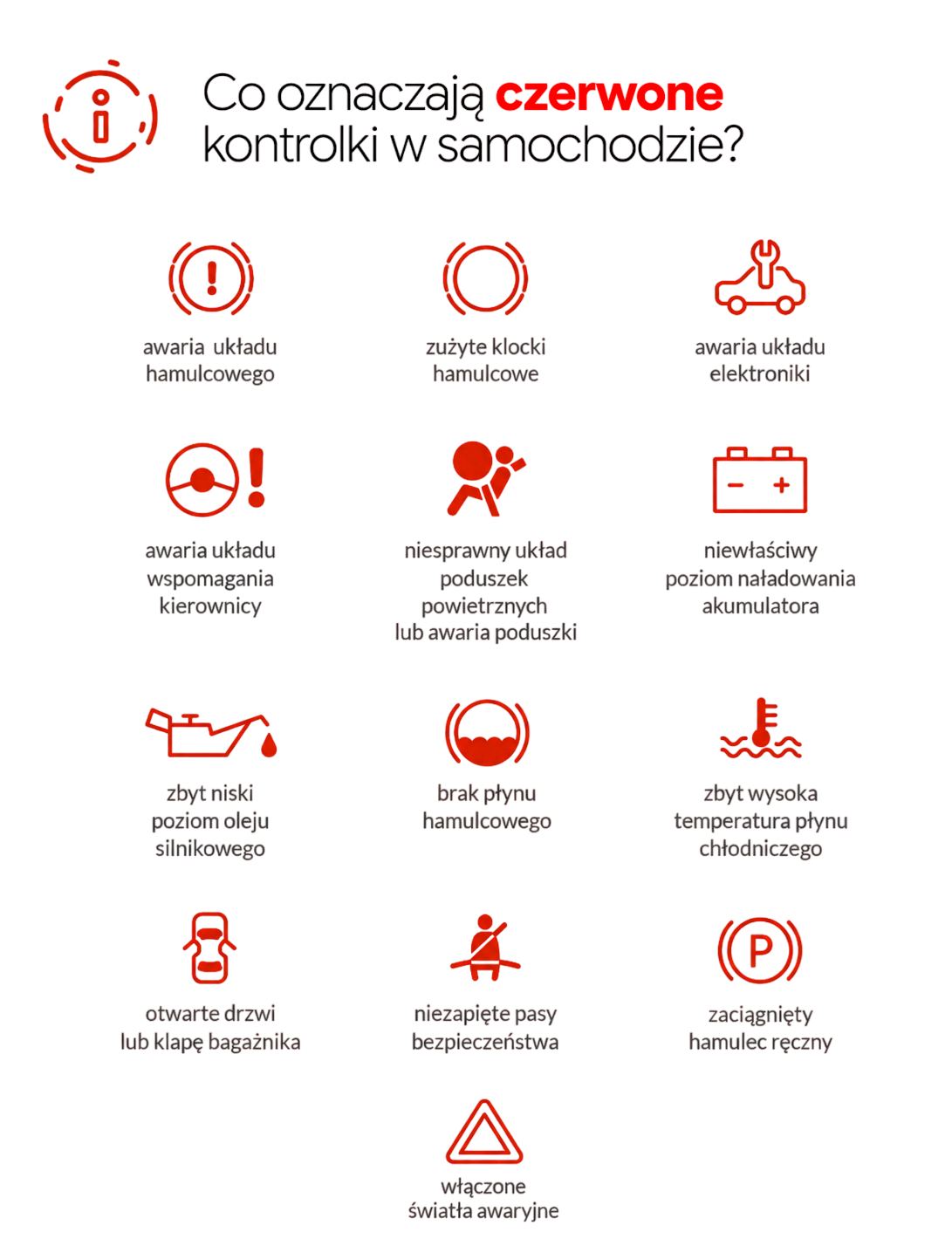
Description of dashboard lights – what do the red ones mean?
We've reached the most important section of our guide. The appearance of these warning signs requires the driver to remain calm and take decisive action, often necessitating immediate termination of the journey.
Red alarm lights – signal to stop the vehicle immediately
In each pictogram combination, red warning lights indicate the most critical faults and require immediate attention. They are not advisory in nature—they are a direct warning of a critical threat to the engine or your safety. The most dangerous and most common of these are:
- The classic oil drop : The legendary oil warning light. Often misinterpreted as a warning that oil needs to be added, when in reality it actually indicates dangerously low, critical oil pressure in the lubrication system. Ignoring this warning and continuing to drive almost always results in engine seizure.
- Thermometer immersed in water : This means that the coolant temperature has reached a level that is dangerous for the engine and may cause the block to crack and the engine to boil over.
- Capital (P) or exclamation mark in a circle and brackets : Red brake system symbol, indicating, among other things, a critically low brake fluid level or an ABS system failure.
- A rectangle with a plus and minus sign : The commonly known battery warning light. Importantly, it doesn't indicate a sudden battery failure, but rather that the vehicle has completely lost charge from the alternator. You're driving on reserve power, and without it, all electronics will shut down after a dozen or so kilometers.
- Seat belt not fastened / door open : While these may seem trivial, they are a reminder of the basic safety precautions before driving away.
If you don't know what the red lights mean and you see them on the dashboard after starting the engine, you should definitely refrain from continuing your journey.
How to properly react to a red light while driving?
The situation is serious, but it doesn't mean you have to slam on the brakes in the middle of a busy road. If a red warning light comes on in your dashboard while driving (especially the oil pressure, cooling system warning, or the flashing brake system exclamation mark), your priority is to immediately pull over to the shoulder, the emergency lane, or into a lay-by, observing safety precautions (hazard warning lights on, warning triangle displayed, and safety vest use). Then, turn off the engine to avoid damaging it. The golden rule is: pull over, turn it off, and call for help. This is what a serious roadside breakdown looks like. Trying to save money on a tow truck in this particular case almost always leads to drastic repairs to the heart of the car.
The description of the controls in the car is intended to be helpful, not to scare.
To wrap up the topic of icons illuminating the speedometer area, it's worth looking at them from a slightly different, more user-friendly perspective. Knowing these pictograms should bring you peace of mind.
The dashboard as a communication system with the driver
Browsing online forums and searching for the meaning of individual symbols, it's easy to become paranoid and fear the worst. However, remember that modern automotive technology is moving toward extreme failure prevention. The symbols displayed by the on-board computer or dashboard are simply advanced self-diagnostics. The car "talks" to you, suggesting the best operating environment for the machine. Instead of fearing the meaning of individual dashboard markings, start treating it as a friendly navigator that not only informs you of problems but also reminds you of maintenance obligations. The more modern the vehicle, the fewer deviations from the norm the electronics can handle, ensuring comfort on the road.
Prevention and regular service – how to avoid surprises on the road?
The best way to minimize the appearance of mysterious symbols on your car's screens is to strictly adhere to scheduled maintenance. Regularly replacing fluids and filters, and maintaining your brakes and tires are key to your car's reliability and your safety.
It's worth mentioning one important issue that often raises concerns during driving lessons. When you get in the car and turn the key to the "ignition" position, almost the entire instrument cluster lights up like a Christmas tree for a few seconds. This is a completely natural phenomenon – a so-called instrument cluster test that checks whether the instrument cluster diodes and the measuring systems are working properly. After a few seconds (at the latest after starting the car), most of them should go out. If you remember the basic meaning of car warning lights, you'll easily navigate the maze of modern technology. We wish you a safe and trouble-free journey!
Frequently Asked Questions (FAQ)
Mateusz Mentel
Author of the entryHe has been associated with LadneFelgi.pl since 2024. He specializes in aluminum wheels and modern automotive solutions. His day-to-day responsibilities include creating expert articles, marketing activities, content creation, and managing social media channels.