



 Modern design
 Perfect fit
 High durability
 Free shipping within 24 hours
 Individual project
 Dedicated caregiver





What is the difference between rims and hubcaps?
Rims and hubcaps are components that every driver sees every day, yet they are often confused. Although both are found on the wheels and contribute to the car's appearance, they actually serve completely different roles. The rim is a key design element – driving would be impossible without it. A hubcap, on the other hand, is an accessory intended to improve the car's aesthetics and to some extent protect selected wheel components.
In this article, we explain in an accessible yet expert manner the difference between a rim and a hubcap, the materials they're made of, how they're installed, their practical importance, and when their use makes sense. We'll also examine costs, durability, and real benefits, so every driver can make an informed decision about the best solution for their car.

What is the difference between a rim and a hubcap – key design differences
Although the terms rim and hubcap are sometimes used interchangeably in everyday language, they actually represent completely different wheel components – both in terms of structure and function. Understanding this difference is crucial to making informed decisions about the appearance, use, and protection of your car's wheels. In this section, we clearly separate what's necessary for driving from what's optional and aesthetically pleasing .
The rim as the foundation of the wheel – why is it necessary?
The rim is one of the fundamental components of a wheel. Simply put, it's the framework on which the tire is mounted and which directly connects the wheel to the vehicle's hub. It's the rim that transfers the vehicle's weight, driving forces, braking forces, and lateral forces generated during cornering. Without it, a vehicle's movement is physically impossible.
If someone asks what a rim is, the shortest and most accurate answer is: a structural element without which a wheel cannot function . The rim is responsible not only for the stable seating of the tire, but also for proper wheel balance, braking performance, and overall driving safety.
In practice, we encounter two most popular types:
- steel rim – simple in design, resistant to mechanical damage, often used in budget cars or as a winter set,
- aluminum rim – lighter, more aesthetic, available in many designs and colors, increasingly factory-fitted even in mid-range cars.
Regardless of the material, every rim is an integral part of the chassis. It's designed for specific vehicle specifications, such as bolt pattern, diameter, width, and offset. It's a component that can't be "replaced" or omitted—without a rim, the car simply won't run.
Hubcap as protection and decoration – an optional aesthetic element
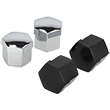
A hubcap is a completely different category of wheel component. Unlike a rim, it serves no structural purpose and does not affect the vehicle's drivability. It is most often a lightweight plastic cover that fits directly onto the rim—usually steel.
When someone asks what a hubcap is, the answer is: a concealing and decorative element whose main purpose is to improve the wheel's appearance and partially protect the rim from dirt. Hubcaps cover the steel wheel rim, giving it a more attractive, often "aluminum" appearance.
It is worth emphasizing a very important difference:
Driving without hubcaps is completely safe and legal . Their absence does not affect the car's handling, suspension durability, or braking performance. Hubcaps do not transfer any load – they are mounted on clips or spring rings and can be removed or replaced at any time.
Their role comes down mainly to:
- improving the visual aspect of the wheels,
- limiting the accumulation of dirt and road salt on the rim,
- protection of mounting screws against external factors.
In summary: a rim is an essential element , while a hubcap is an accessory . Both are located in the same place – on the wheel – but they perform completely different functions. This difference forms the basis for further considerations about car aesthetics, rim protection, and real operating costs.
Materials and durability – what are rims and hubcaps made of?
The differences between a rim and a hubcap are evident not only in their function, but also—and perhaps above all— in the materials used in production . These raw materials determine durability, resistance to damage, and the impact a given component has on a car's daily operation. In this section, we examine the materials used to make rims and hubcaps and what this means in practice .
| Criterion | Rim | Hubcap |
|---|---|---|
| Function | The structural element of the wheel on which the tire is mounted and which connects the wheel to the vehicle hub. | A decorative and protective element covering the rim (usually steel). |
| Material | Steel or aluminum alloy. | Plastic (most often ABS). |
| Installation | Bolted to the hub using screws or nuts. | Mounted on snaps or a spring ring on a steel rim. |
| Impact on driving | It has a direct impact on handling, stability and driving safety. | No impact on vehicle handling or safety. |
| Typical risks | Mechanical damage, deformation, scratches, corrosion (depending on the material). | Falling off while riding, breakage, loss or theft. |
| Cost | Several hundred to several thousand zlotys per set (depending on type and size). | Several dozen to several hundred zlotys for a set of four pieces. |
Steel and aluminum vs. plastics
Rims are structural elements, so they must be made of high-strength materials. The most common include:
- steel rims , made of pressed steel, valued for their durability and impact resistance,
- aluminum rims , made of light alloys that combine good strength with lower weight and attractive appearance.
Regardless of the type, the rim material must withstand significant loads: the weight of the vehicle, the forces exerted during acceleration and braking, and the impacts resulting from driving over bumps. Therefore, even after contact with a curb, although the rim may scratch or deform, it usually does not immediately fail.
Plastic wheel covers are a completely different story. They are most often made of ABS plastic , which is lightweight and flexible, but incomparably less durable than metal. Their purpose isn't to carry loads, but rather to provide protection and aesthetics, so the priority is low weight and ease of molding, not structural strength.
In practice, this means that:
- the hubcap breaks easily when hitting a curb,
- stone chips can permanently damage its surface,
- In winter, plastic loses its elasticity more quickly and becomes more susceptible to cracks.
This is where drivers often face a dilemma: rims or hubcaps? In terms of durability, the difference is clear – metal rims are many times more resistant to mechanical damage than plastic covers.
Weight and its effect on driving
In the context of driving, wheel weight is crucial, or more specifically, the so-called unsprung weight—the weight of components not supported by the suspension (e.g., wheels, tires, brakes). The lower this weight, the faster and more effectively the suspension can respond to road irregularities.
For this reason, aluminum rims, thanks to their lower weight compared to steel rims, are often perceived as providing better ride comfort and steering precision. These differences aren't always dramatic in everyday use, but they can be noticeable at higher speeds and on poorer road surfaces.
However, it is worth emphasizing one thing clearly:
Hubcaps have a negligible impact on wheel weight and the car's handling . They are very lightweight, and their presence or absence has virtually no impact on suspension performance or driving characteristics. In the context of the topic "hubcaps and driving," the answer is simple: the difference is negligible.
Installation and maintenance – how to install and remove hubcaps and rims?
The differences between rims and hubcaps are also very clear when considering installation and daily maintenance . This aspect is especially important for drivers who change their own wheels seasonally or want to quickly improve their car's appearance without a trip to the service center. In this section, we explain how rims and hubcaps are installed and the limitations of each solution .
Mounting methods – screws vs. latches
Rims are a structural element of the wheel, so their assembly must be rigid, precise, and secure. Every rim—whether steel or aluminum—is bolted directly to the hub using wheel bolts or nuts. Proper assembly requires a wrench, preferably a torque wrench, to tighten the bolts with the appropriate force.
Rim mounting is an activity that:
- requires lifting the car (jack or lift),
- must be performed in accordance with the manufacturer's recommendations,
- has a direct impact on driving safety.
Hubcaps are installed in a completely different way. They are most often pressed into place, using a metal expansion ring that holds the hubcap to the steel wheel rim. In practice, this means:
- they are not bolted to the hub,
- no tools required,
- they can be put on and taken off in a few seconds.
Less common are hubcaps that are partially bolted onto the wheel bolts, but even then, their attachment is still secondary to the rim. If anyone's wondering how to install a hubcap, the answer is simple: simply align it with the valve stem, align it evenly, and press down until the clips click into place.
Due to the relatively loose nature of the mounting, many drivers use cable ties to additionally secure their hubcaps. This is a popular and inexpensive method that reduces the risk of losing the hubcap when driving over bumps, although it is certainly not a factory-installed solution.
Risk of theft and loss
One of the biggest drawbacks of hubcaps is their susceptibility to loss or theft. Because they are mounted on snaps, they can fall out:
- when driving over potholes,
- when hitting a curb,
- during dynamic maneuvering on poor road surfaces.
A lost hubcap is a fairly common problem, especially in winter when roads are in poor condition and plastic loses its elasticity. As a result, a car quickly begins to look uneven, with one wheel visually different from the others.
Theft also plays a role in the detriment of hubcaps. Removing them is incredibly easy and requires no tools, so they disappear far more often than rims. A moment's inattention in a parking lot is enough for a car to be stripped of its cover.
Rims are definitely safer in this regard. While wheel theft still occurs, it requires:
- use of tools,
- lifting the vehicle,
- much more time and risk.
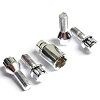
Additionally, many cars are equipped with locking screws that effectively hinder quick removal of rims. In the case of hubcaps, such real protection is practically nonexistent – cable ties may deter the occasional "amateur," but they don't provide significant protection.
Aesthetic and protective functions – why is it worth (or not) using hubcaps?
Car hubcaps have been controversial for years. Some consider them a practical and inexpensive accessory, while others consider them an unnecessary, easily lost item. To truly answer the question of whether they're worth using, you need to consider them from two perspectives: aesthetics and protection. Only then can you clearly see where the real benefits end and the compromises begin.
Improving the appearance of steel rims
It's undeniable that steel wheels—while durable and functional—rarely impress with their appearance. A stark black or silver finish doesn't complement the modern lines of the body and often detracts from the overall look of the car. This is where wheel covers play their primary role.
Well-selected hubcaps can effectively:
- cover the simple, technical form of a steel rim,
- visually "refresh" the car,
- give it a more modern character.
The market offers models designed to resemble aluminum rims – with imitation spokes, a glossy finish, or contrasting details. This makes alloy wheel hubcaps a popular solution among drivers who want to improve their car's appearance without spending a fortune. They're a cost-effective way to refinish their wheels, requiring no repainting or replacing the entire wheel set.
It's worth noting, however, that even the best hubcaps won't replace real aluminum rims. Up close, the differences in build quality and depth of detail are visible, and the effect itself is more "camouflage" than premium. Nevertheless, many users value a quick improvement to their car's aesthetics at minimal cost, and hubcaps perform very well in this role.
Protection of braking system components and screws
Beyond appearance, the argument for protection is often raised. The question arises: do hubcaps actually protect rims and technical components? The answer is: partially – but with certain limitations.
A hubcap can, to some extent:
- protect wheel bolts from direct contact with road salt,
- limit the accumulation of mud and sand on the steel rim,
- reduce the rate of surface aesthetic corrosion.
In this sense, it does indeed help protect wheel bolts and can slow down the corrosion process of steel rims, especially in winter. However, this protection isn't airtight or long-lasting. Moisture and dirt still get under the wheel cover, and lack of regular cleaning can lead to dirt accumulating in hidden places.
An important aspect that's less often discussed is brake cooling. Rims—especially aluminum ones—are designed to allow for free airflow and efficient heat dissipation from the discs and calipers. Sealed or semi-sealed wheel covers can restrict this process.
In normal, relaxed city driving, this difference is usually insignificant. However, when:
- long descents,
- dynamic driving,
- frequent braking from higher speeds,
Restricted airflow can cause the brake system to heat up more quickly. This is one reason why hubcaps are practically unheard of on sports cars and higher-performance vehicles.
Purchase and replacement costs – rims and hubcaps
For many drivers, price is a key factor in deciding between rims and hubcaps. The cost differences between these solutions are very significant and often determine how quickly and to what extent a car's appearance can be improved. In this section, we compare both options from a purely economic perspective.
Price of a set of hubcaps vs. a set of new rims
The biggest advantage of hubcaps is their low entry price. Prices for basic versions start at just a few dozen złoty for a set of four. Even more visually refined models, imitating alloy wheels, rarely exceed several hundred złoty. This makes affordable hubcaps one of the easiest ways to quickly update your car's appearance without breaking the bank.
When it comes to rims, the situation is completely different. When answering the question of how much rims cost, several factors must be considered:
- material (steel or aluminum),
- size and manufacturer,
- quality of workmanship and design.
A set of new steel rims costs several hundred zlotys, while aluminum rims—especially brand-name rims or larger sizes—can cost from several thousand to even several thousand zlotys per set. This is a significant investment that often requires considerable planning.
From an economic point of view, hubcaps win if:
- the goal is to quickly improve the appearance,
- the car is of a utilitarian or budget nature,
- the driver does not plan to make a long-term investment in the appearance of the wheels.
Rims, on the other hand, are more cost-effective in the long run. Although more expensive initially, they are:
- more durable,
- resistant to everyday use,
- less susceptible to loss or theft,
- often increase the resale value of the car.
Therefore, when considering cost-effectiveness, it's worth considering more than just the purchase price. Hubcaps are a short-term, low-cost solution, ideal as an aesthetic compromise. Rims – especially aluminum ones – are a long-term investment that truly impacts the car's appearance, perception, and comfort.
Frequently Asked Questions (FAQ)
Mateusz Mentel
Author of the entryHe has been associated with LadneFelgi.pl since 2024. He specializes in aluminum wheels and modern automotive solutions. His day-to-day responsibilities include creating expert articles, marketing activities, content creation, and managing social media channels.